Biennial mallow (Alcea biennis)
Care, watering, light and tips for Biennial mallow on Floravia.
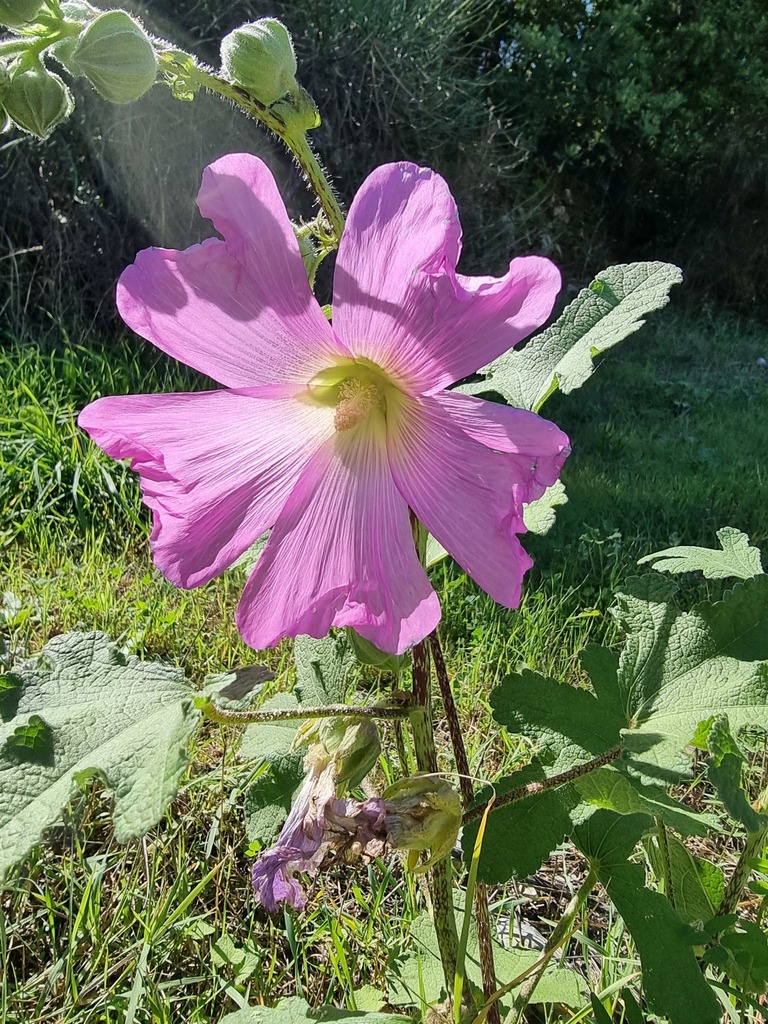
Quick facts
- Family: Malvaceae
- Difficulty: Easy to care for
- Watering: every 7 days
- Light: Partial shade
- Temperature: 10–30 °C
About Biennial mallow
Alcea biennis, commonly known as biennial hollyhock, is a tall herbaceous plant reaching up to 2 meters, characterized by its erect stems and large flowers in shades from white to pale pink. Its showy flowers, appearing in spikes, make it ideal for the back of borders or as a focal point in cottage gardens. It is a biennial, meaning it flowers in its second year before dying, but it readily self-seeds.
Native range
Southwestern Europe, the Balkans, and the eastern Mediterranean region
Care tips
Alcea biennis thrives in full sun, requiring at least 6 hours daily for abundant flowering. It prefers well-drained soils, of moderate to rich fertility, and tolerates a wide range of pH. Watering should be regular during dry periods, especially in its first year, but avoid waterlogging which can lead to root rot. A common mistake is not providing support for the tall stems in windy areas, which can cause them to snap.
How to save a dying Biennial mallow
- Warning signs
- Yellowing or spotted leaves, soft stems, no flowering, general wilting.
- First aid
- Check drainage and soil moisture. Remove damaged leaves/stems. Repot if soil is compacted.
- What kills it
- Overwatering causing root rot or lack of sun. Untreated pests like aphids.
- Can it be saved?
- Yes, if you act quickly and correct the issue. Inspect roots for rot.