Pink floss silk tree (Ceiba chodatii)
Care, watering, light and tips for Pink floss silk tree on Floravia.
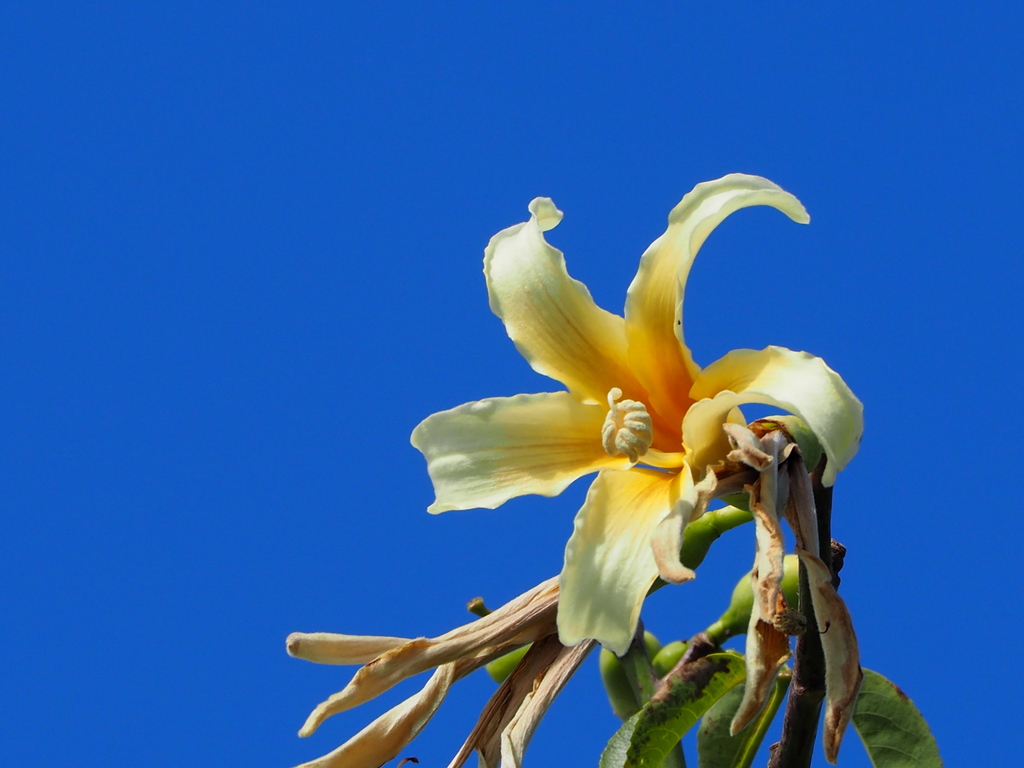
Quick facts
- Family: Malvaceae
- Difficulty: Moderate care
- Watering: every 10 days
- Light: Partial shade
- Temperature: 10–30 °C
About Pink floss silk tree
Ceiba chodatii, also known as the white-flowered floss silk tree, is a deciduous tree remarkable for its swollen trunk base, giving it a sculptural appearance. Its large, white flowers, which emerge before the leaves, are a stunning display. It is ideal as a specimen tree in large gardens or parks, where its silhouette and bloom can be fully appreciated.
Native range
South America, specifically the Gran Chaco of Bolivia, Paraguay, and Argentina.
Care tips
It requires full sun for optimal flowering and robust development. Watering should be moderate, allowing the substrate to dry out between waterings, especially in winter when it is deciduous. It prefers well-drained, sandy or loamy soils, and is sensitive to waterlogging, which can lead to root rot. Avoid excessive pruning, as it can affect its natural shape and flowering.
How to save a dying Pink floss silk tree
- Warning signs
- Yellowing or massive leaf drop, soft trunk or oozing cracks. Leaves dry from tips.
- First aid
- Check drainage and moisture. If potted, repot with good drainage. If in ground, amend soil. Prune dry branches.
- What kills it
- Overwatering (especially in winter) or waterlogging, causing root rot. Also lack of direct sun.
- Can it be saved?
- Yes, if rot hasn't advanced much in the trunk. Act fast to drain and dry the soil.