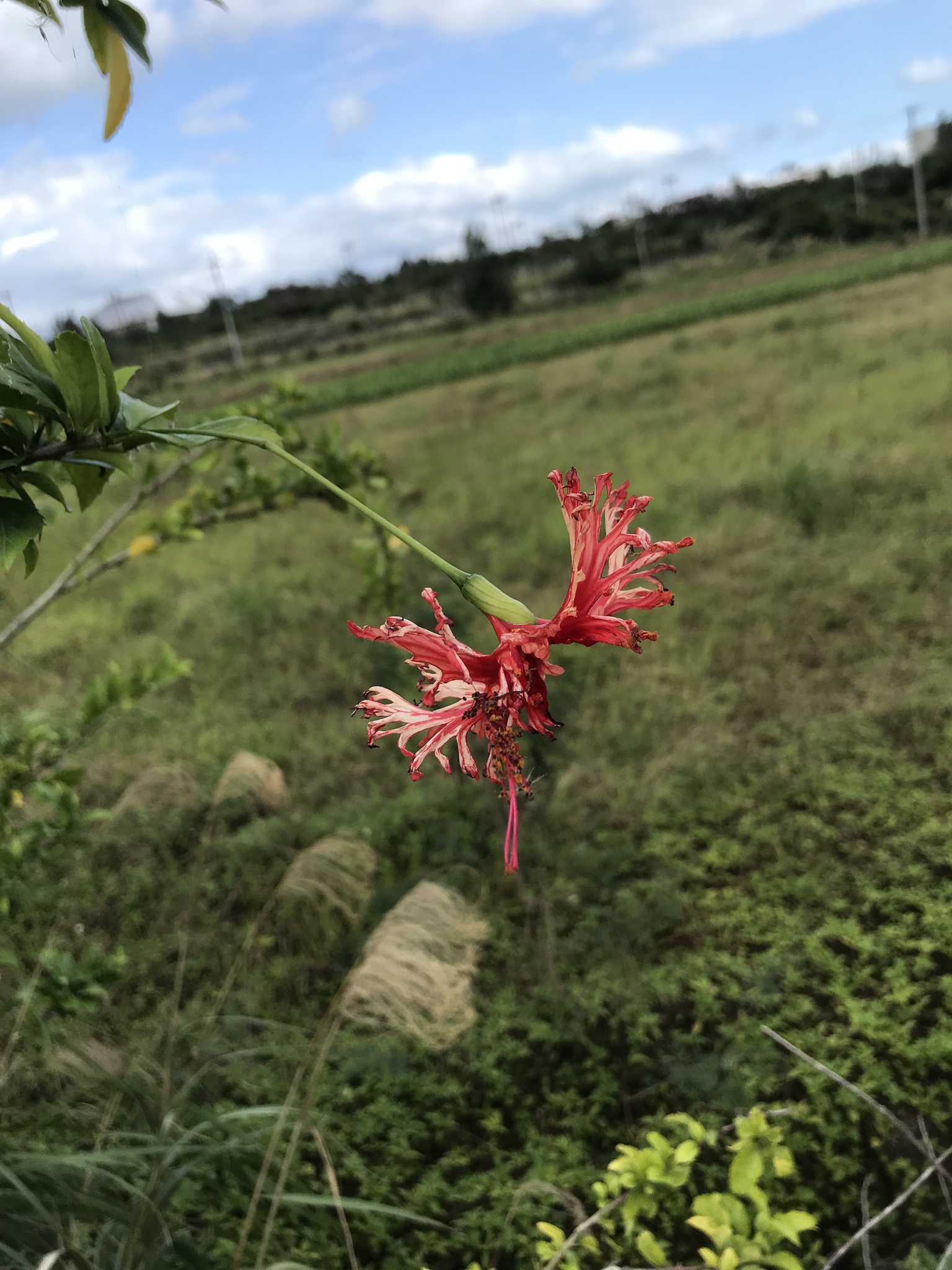
Fringed hibiscus (Hibiscus schizopetalus)
Care, watering, light and tips for Fringed hibiscus on Floravia.
Quick facts
- Family: Malvaceae
- Difficulty: Moderate care
- Watering: every 3 days
- Light: Partial shade
- Temperature: 10–30 °C
- Toxicity: Toxic to pets
About Fringed hibiscus
Hibiscus schizopetalus, commonly known as Fringed Hibiscus or Japanese Lantern, is an evergreen tropical shrub celebrated for its unique and delicate flowers. Its deeply cut, recurved petals, resembling a parachute or a spider, elegantly dangle from slender stems, creating an exotic visual spectacle. It is perfect as a focal point in tropical gardens, patios, or as a container plant in cooler climates where it can be brought indoors during winter.
Native range
East Tropical Africa
Care tips
This hibiscus thrives in full sun to partial shade, requiring at least 6 hours of direct light daily for abundant flowering. Keep the substrate consistently moist but well-drained, avoiding waterlogging which can lead to root rot. It prefers a rich, organic soil, slightly acidic to neutral. A common mistake is insufficient ambient humidity, which can cause bud drop; mist its leaves regularly in dry environments.
How to save a dying Fringed hibiscus
- Warning signs
- Yellow or dropping leaves, soft shoots, poor flowering. Soft or moldy roots.
- First aid
- Check drainage. Prune dead branches. If potted, consider repotting into one with better drainage and light soil. Avoid sudden changes.
- What kills it
- Overwatering. Waterlogging quickly rots its roots. Also extreme cold and drafts.
- Can it be saved?
- Yes, if you act quickly. If roots aren't completely rotted and there are healthy shoots, it can recover with proper care.