Lanceleaf frogfruit (Phyla lanceolata)
Care, watering, light and tips for Lanceleaf frogfruit on Floravia.
Quick facts
- Family: Verbenaceae
- Difficulty: Easy to care for
- Watering: every 7 days
- Light: Partial shade
- Temperature: 10–30 °C
About Lanceleaf frogfruit
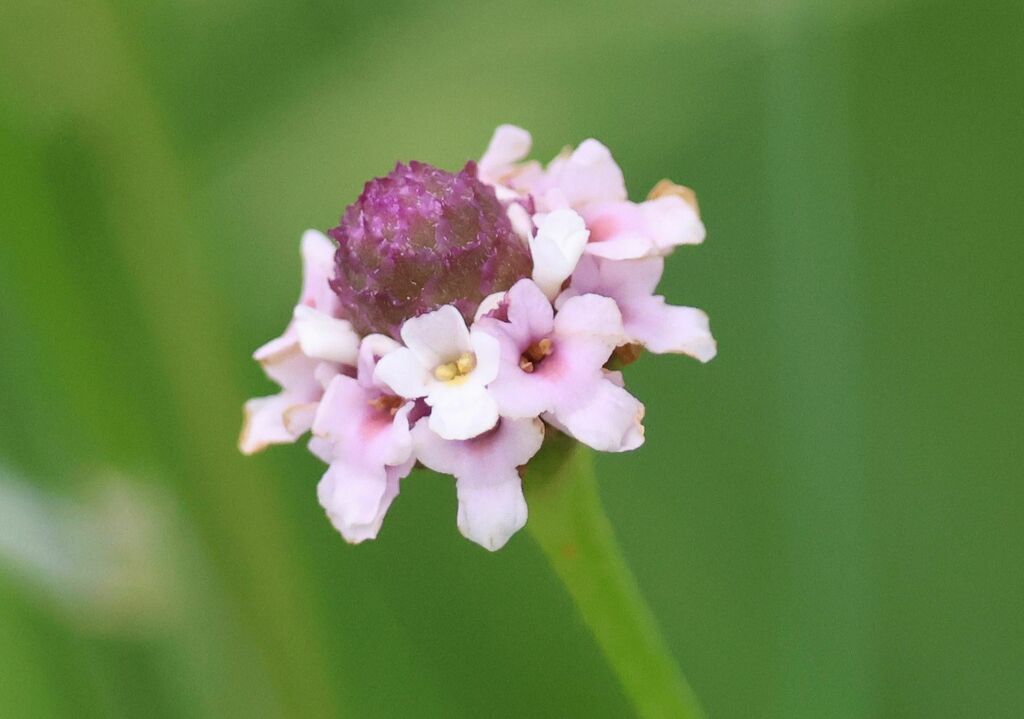
Phyla lanceolata, or lanceleaf fogfruit, is a perennial creeping plant belonging to the Verbenaceae family, native to North America. Its small, lance-shaped leaves and white or pink flowers in compact spikes make it ideal as a ground cover in gardens, rockeries, or between pavers, adding a delicate and natural touch. It's an excellent choice for low-maintenance gardens or for erosion control on gentle slopes.
Native range
North America (from southern Canada to the southern United States and northern Mexico)
Care tips
It prefers full sun to partial shade for abundant flowering, though it tolerates some shade. Regular watering is needed for establishment, but once established, it's quite drought-tolerant; avoid waterlogging as it is susceptible to root rot. It adapts to a wide range of soils but prefers well-drained ones. A common mistake is planting it in heavy, poorly drained soils, which can lead to fungal problems and poor growth.
How to save a dying Lanceleaf frogfruit
- Warning signs
- Yellow or brown, wilted leaves, limp and weak appearance. May lack blooms.
- First aid
- Check watering, it's crucial. If dry, water deeply. If waterlogged, improve drainage or repot. Prune damaged stems.
- What kills it
- Inadequate watering (both over and under) and lack of direct sunlight are its worst enemies. Does not tolerate frost.
- Can it be saved?
- Yes! It's a resilient plant. With proper care, it can recover and grow vigorously again.