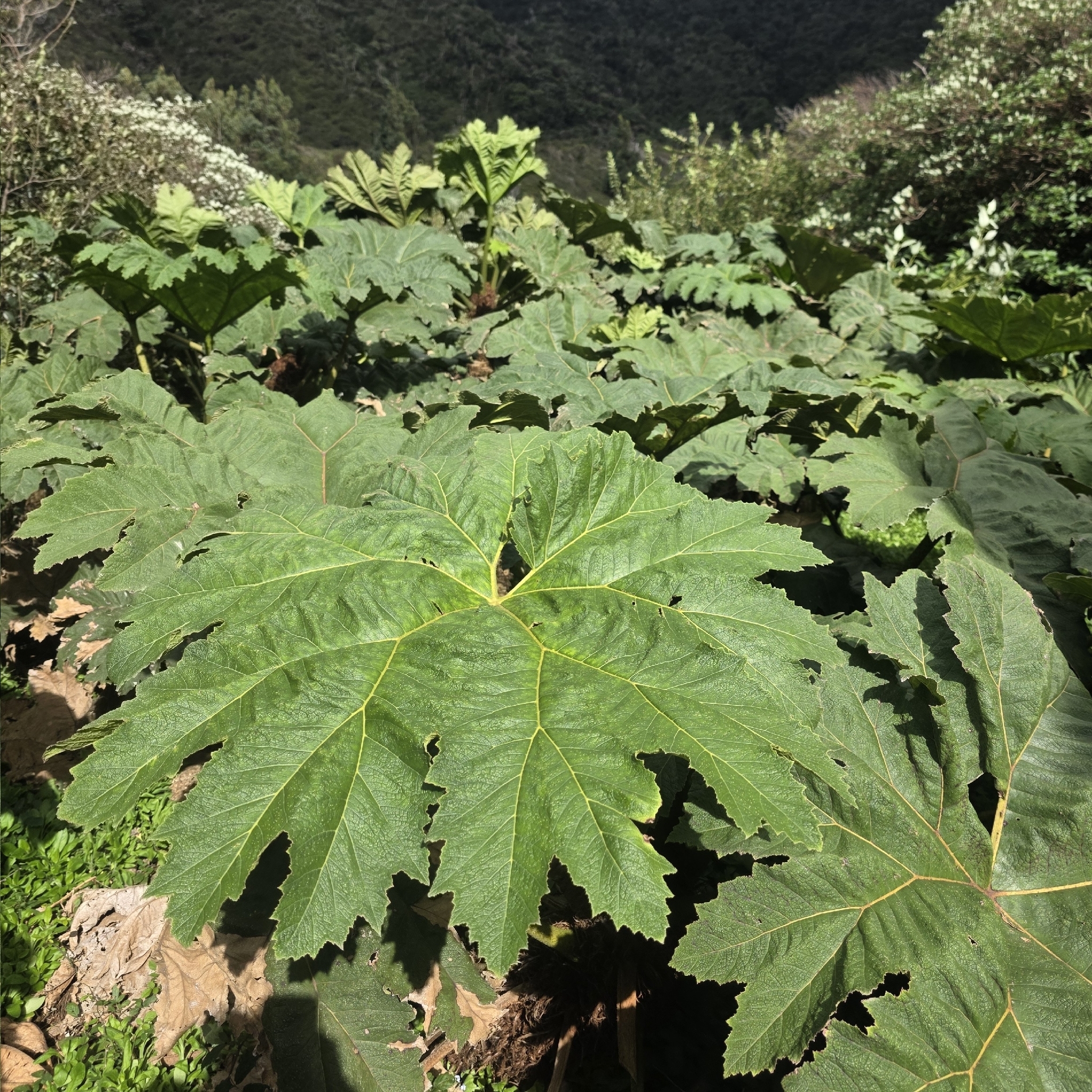
Chilean rhubarb (Gunnera peltata)
Care, watering, light and tips for Chilean rhubarb on Floravia.
Quick facts
- Family: Gunneraceae
- Difficulty: Demanding
- Watering: every 3 days
- Light: Partial shade
- Temperature: 10–30 °C
About Chilean rhubarb
Gunnera peltata, commonly known as Pangue, is a giant perennial herbaceous plant endemic to Chile, famous for its enormous lobed leaves that can exceed two meters in diameter. Its monumental appearance makes it an impressive centerpiece for humid gardens, near water features, or in large spaces where its size can be appreciated. It is ideal for creating a dramatic visual impact and a prehistoric atmosphere.
Native range
Chile and Argentina
Care tips
It requires a location in partial to full shade, protected from intense direct sun, and consistently moist soil, rich in organic matter and well-drained. Watering should be abundant and frequent, especially in summer, ensuring the substrate never dries out completely. It is crucial to protect it from frost, as it does not tolerate it; in cold climates, it is recommended to cover the rhizome with a thick layer of leaves or straw in winter. At all costs, avoid prolonged waterlogging, which can rot the roots, despite its need for moisture.
How to save a dying Chilean rhubarb
- Warning signs
- Wilting or yellowing leaves, dry and crispy edges, stunted growth.
- First aid
- Ensure constant soil and ambient humidity. Check drainage. Protect from intense direct sun.
- What kills it
- Drought (its biggest enemy), lack of ambient humidity, strong direct sun, and poor soil.
- Can it be saved?
- Yes! It's resilient if humidity and proper conditions are restored quickly.