Canary creeper (Tropaeolum peregrinum)
Care, watering, light and tips for Canary creeper on Floravia.
Quick facts
- Family: Tropaeolaceae
- Difficulty: Moderate care
- Watering: every 7 days
- Light: Partial shade
- Temperature: 10–30 °C
About Canary creeper
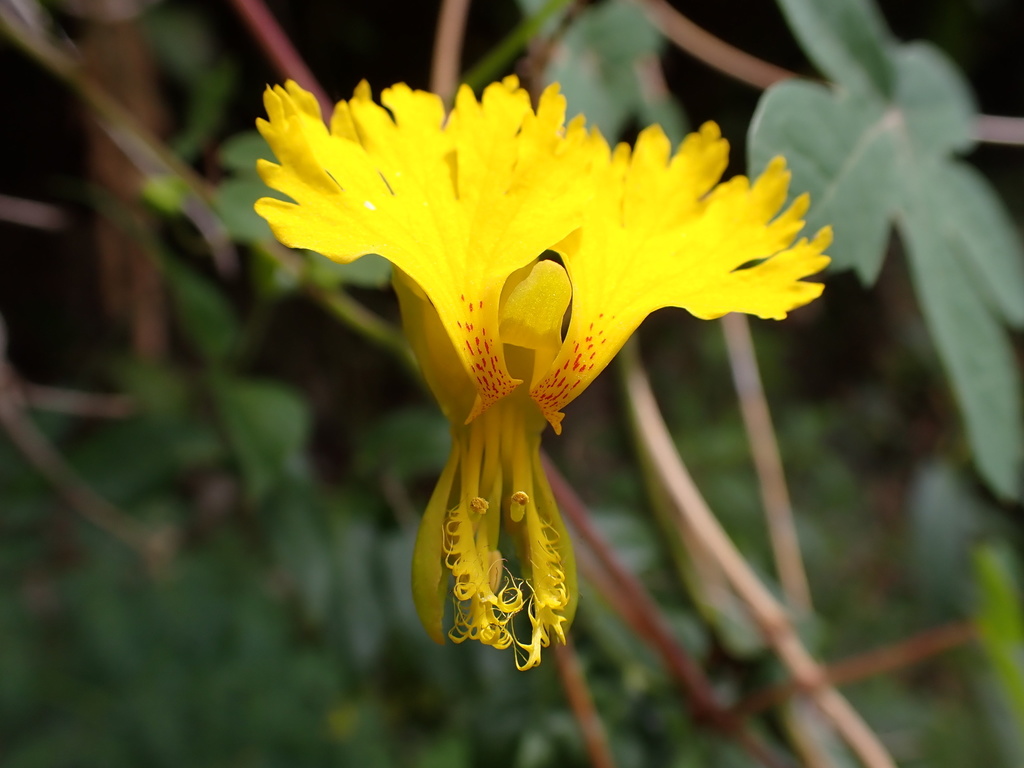
Tropaeolum peregrinum, commonly known as 'canary creeper' or 'canary nasturtium', is a charming annual vine that produces a profusion of bright yellow flowers with delicately fringed petals resembling small birds. Its slender stems and lobed leaves give it a light and airy appearance, ideal for covering pergolas, trellises, or hanging baskets where its flowers can cascade. It is an excellent plant for adding an exotic and vibrant touch to gardens and balconies during the warmer months.
Native range
The Andes of Peru and Ecuador
Care tips
This vine prefers full sun to partial shade, thriving best with at least 6 hours of direct sunlight per day. Watering should be regular, keeping the substrate moist but not waterlogged, especially during active growth and flowering periods. Use a well-drained substrate rich in organic matter; a common mistake is excessive nitrogen fertilization, which can promote leafy growth at the expense of flowering. Protect plants from frost, as they are not cold-hardy.
How to save a dying Canary creeper
- Warning signs
- Yellowing or wilting leaves, soft and blackened stems. The plant stops vigorous growth.
- First aid
- Check drainage and soil moisture. If waterlogged, repot into dry soil. If dry, water moderately.
- What kills it
- Overwatering and lack of light. Canary creeper needs sun and well-drained soil to thrive.
- Can it be saved?
- Yes, if you act quickly. Remove damaged parts and adjust watering and sun exposure. Don't give up!