Himalayan balsam (Impatiens glandulifera)
Care, watering, light and tips for Himalayan balsam on Floravia.
Quick facts
- Family: Balsaminaceae
- Difficulty: Easy to care for
- Watering: every 3 days
- Light: Partial shade
- Temperature: 10–30 °C
- Toxicity: Toxic to pets
About Himalayan balsam
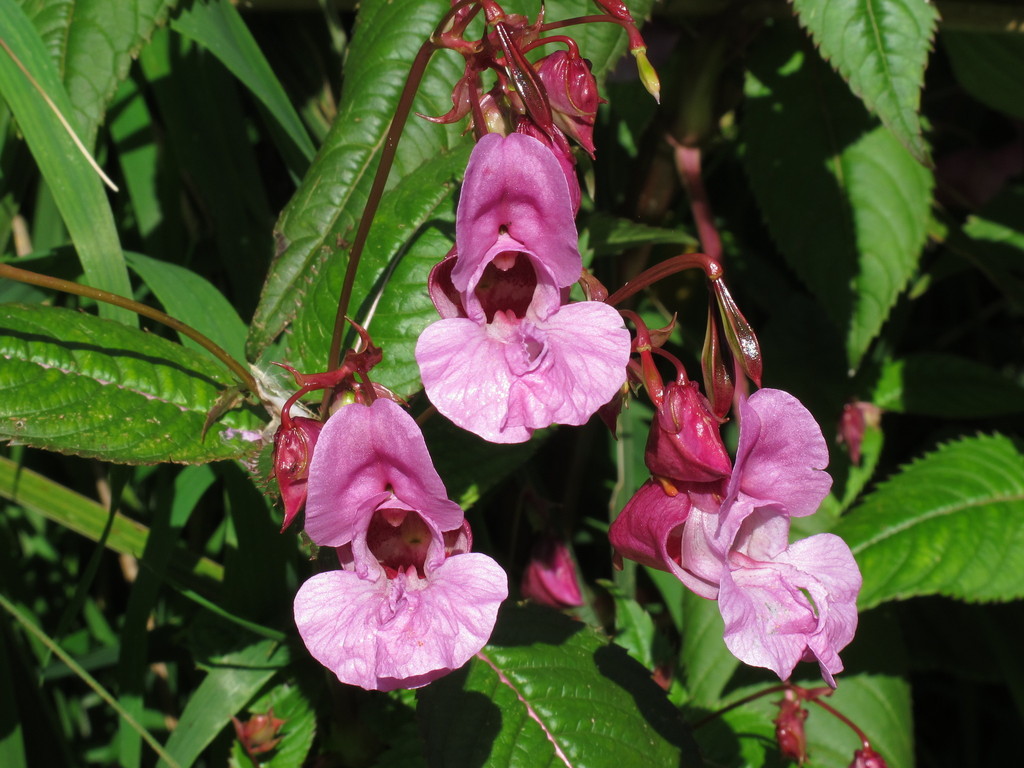
Impatiens glandulifera, commonly known as Himalayan Balsam, is a fast-growing annual plant that can reach impressive heights of up to 2-3 meters. It produces robust, hollow stems with lance-shaped leaves and showy pink, purple, or white flowers that bloom from mid-summer until the first frosts. Due to its size and abundant flowering, it is ideal for creating temporary privacy screens or adding an exotic touch to pond and stream edges in temperate climates, though it is considered an invasive species in many regions.
Native range
Himalayas, Indian subcontinent
Care tips
It prefers partial to full shade, especially in warm climates, and consistently moist, nutrient-rich soils. Watering should be frequent and abundant to maintain substrate moisture, preventing it from drying out completely. Although not demanding about soil type, a well-drained yet moisture-retentive substrate is ideal. A common mistake is allowing it to spread unchecked, as its seeds are explosively dispersed, making it a highly invasive plant.
How to save a dying Himalayan balsam
- Warning signs
- Wilted, limp, or yellowing leaves, soft stems. Dropping flowers and buds.
- First aid
- Check soil moisture. If dry, water deeply. If waterlogged, aerate roots.
- What kills it
- Overwatering leading to root rot or severe dehydration from lack of water.
- Can it be saved?
- Yes, if you act quickly. Remove severely damaged parts and adjust watering and light.