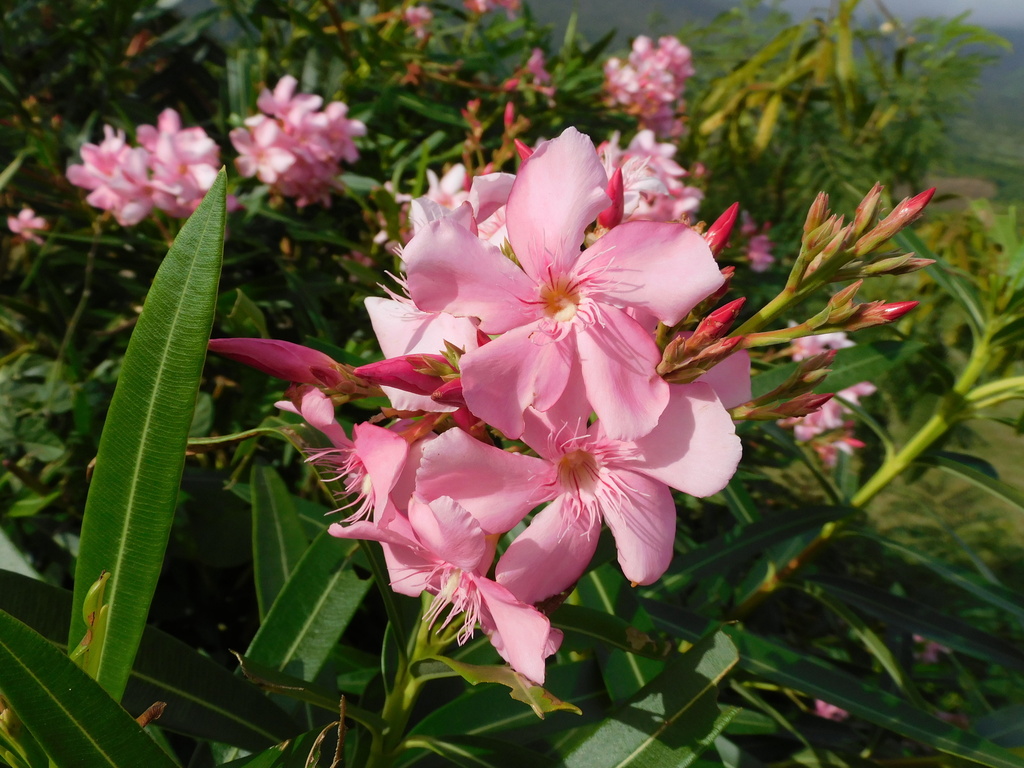
Oleander (Nerium oleander)
Care, watering, light and tips for Oleander on Floravia.
Quick facts
- Family: Apocynaceae
- Difficulty: Easy to care for
- Watering: every 3 days
- Light: Partial shade
- Temperature: 10–30 °C
- Toxicity: Toxic to pets
About Oleander
The oleander (Nerium oleander) is an evergreen shrub or small tree, renowned for its abundant and showy flowers in shades of white, pink, red, or yellow, blooming from spring to autumn. It's a robust Mediterranean plant, perfect for sunny gardens, hedges, or as a standalone specimen, offering an exotic and drought-tolerant touch. Its beauty makes it a popular choice for warm climates, though it's crucial to remember that all parts of the plant are poisonous.
Native range
Mediterranean region, from Morocco and Portugal eastward to southern China
Care tips
Oleander thrives in full sun and tolerates drought well once established, though regular watering during dry spells will encourage more abundant blooms. It prefers well-drained, even poor soils, but benefits from slightly fertile substrate. A common mistake is planting it in deep shade or overly wet soils, which can reduce flowering and increase the risk of fungal diseases. It is crucial to handle it with caution due to its toxicity, wearing gloves when pruning.
How to save a dying Oleander
- Warning signs
- Yellow or brown leaves falling heavily, dry or wilted branches, no blooms.
- First aid
- Check watering (dry or waterlogged soil), ensure full sun, prune dead branches. Lightly fertilize in spring.
- What kills it
- Overwatering in winter, lack of sun, or severe frosts. Also spider mites in dry conditions.
- Can it be saved?
- Yes, it's a tough plant. Act quickly to identify and correct the issue. Pruning helps greatly.