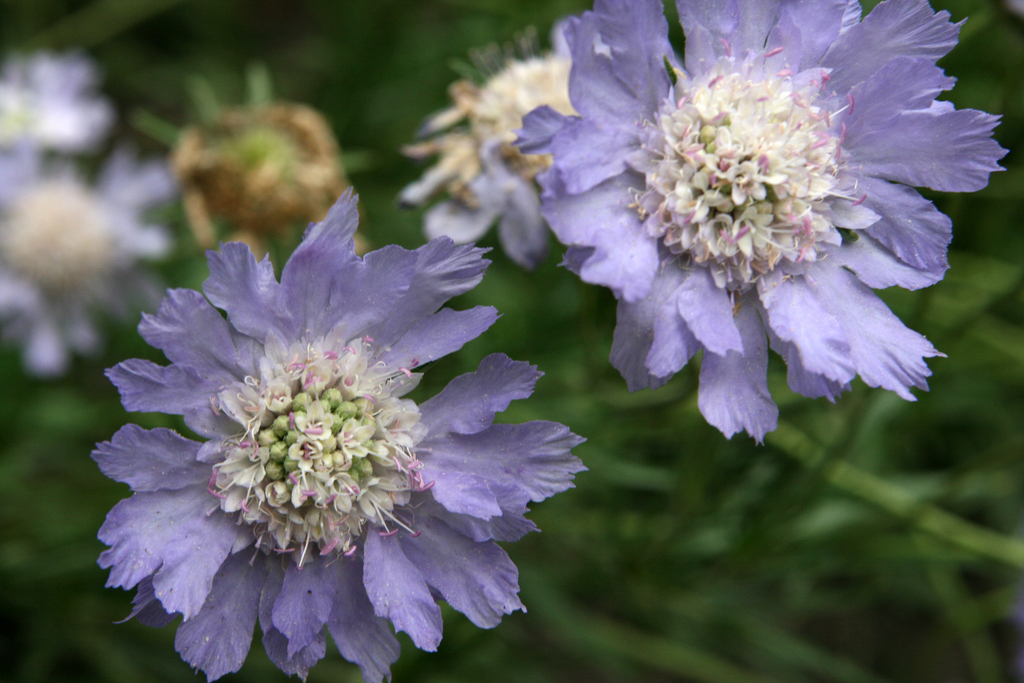
Caucasian scabious (Lomelosia caucasica)
Care, watering, light and tips for Caucasian scabious on Floravia.
Quick facts
- Family: Caprifoliaceae
- Difficulty: Moderate care
- Watering: every 7 days
- Light: Partial shade
- Temperature: 10–30 °C
About Caucasian scabious
Lomelosia caucasica, commonly known as 'höstvädd' or Caucasian scabious, is an attractive perennial plant valued for its delicate pincushion-like flowers that bloom from mid-summer into autumn. Its blossoms, often in shades of lavender, blue, or white, rise on slender stems above a basal rosette of green foliage. It's an excellent choice for garden borders, rockeries, or for attracting pollinators, adding a touch of lightness and late-season color to the landscape.
Native range
Caucasus region (Armenia, Azerbaijan, Georgia, Russia)
Care tips
This plant prefers full sun exposure for optimal blooming, though it can tolerate some partial shade in very hot climates. Watering should be moderate, allowing the substrate to dry out slightly between waterings, as it is susceptible to waterlogging. It requires well-drained soil, preferably neutral to slightly alkaline; a common mistake is planting it in heavy, wet soils, which can lead to root rot. Deadheading spent flowers will encourage continuous blooming.
How to save a dying Caucasian scabious
- Warning signs
- Wilting or yellowing leaves, sparse or no flowering, soft stems.
- First aid
- Check drainage and soil moisture. If dry, water thoroughly; if waterlogged, improve drainage. Protect from intense sun if young.
- What kills it
- Overwatering (root rot) or heavy soils with poor drainage. Also prolonged drought.
- Can it be saved?
- Yes, if roots aren't completely rotted. Act quickly with watering and substrate adjustments.