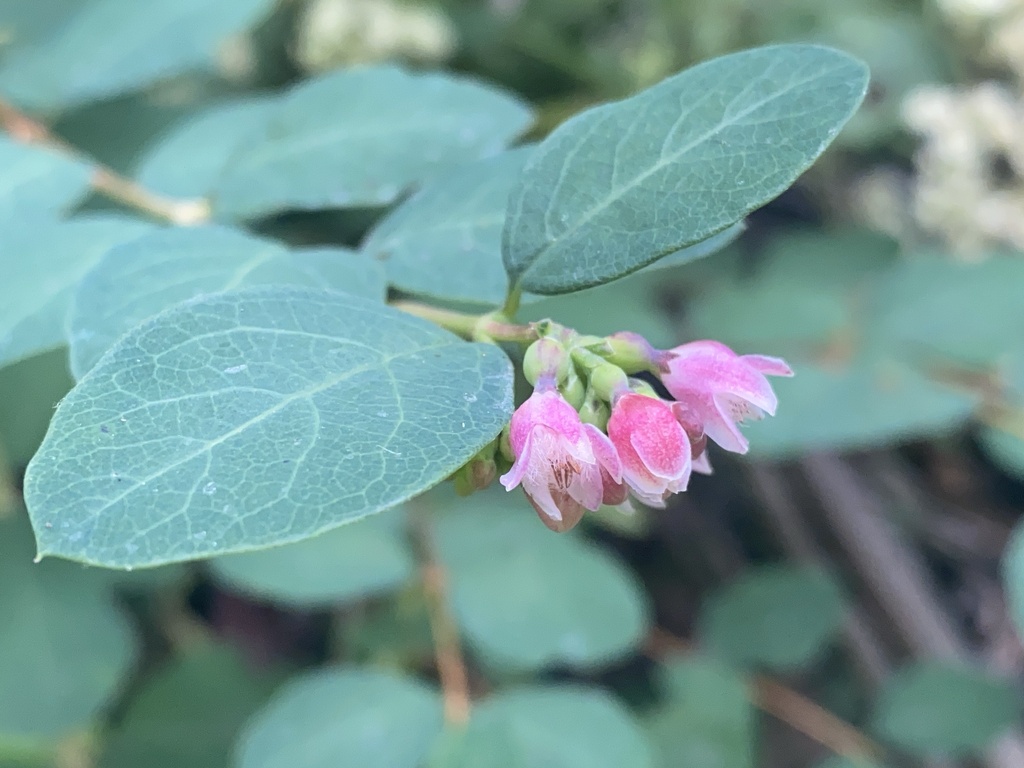
Common snowberry (Symphoricarpos albus)
Care, watering, light and tips for Common snowberry on Floravia.
Quick facts
- Family: Caprifoliaceae
- Difficulty: Easy to care for
- Watering: every 7 days
- Light: Partial shade
- Temperature: 10–30 °C
- Toxicity: Toxic to pets
About Common snowberry
Symphoricarpos albus, commonly known as Common Snowberry, is a deciduous shrub native to North America, famed for its abundant, bright white berries that persist into winter, providing unique visual appeal. Its slender, arching branches and bluish-green foliage make it ideal for informal hedges, woodland edges, or as a filler plant in wild gardens, particularly striking when the berries are present. It's an excellent choice for adding seasonal interest and attracting birds in temperate climates.
Native range
North America (Canada, United States, Mexico)
Care tips
It prefers full sun to partial shade; more sun will result in more berries. It is tolerant of a wide range of soils but prefers well-drained, moist conditions, though it can tolerate some drought once established. Water regularly during its first year to establish a good root system; thereafter, occasional watering will suffice. A common mistake is planting it in overly heavy, poorly drained clay soils, which can lead to root rot.
How to save a dying Common snowberry
- Warning signs
- Wilted or yellowing leaves, premature berry drop, weak shoots. May indicate water stress or poor soil.
- First aid
- Check soil moisture. If dry, water deeply. If waterlogged, improve drainage. Add compost.
- What kills it
- Prolonged drought or constant waterlogging, suffocating roots. Also lack of nutrients in poor soils.
- Can it be saved?
- Yes, it's quite resilient. Acting quickly at the first signs greatly improves its chances of recovery.