Wild carrot (Daucus carota)
Care, watering, light and tips for Wild carrot on Floravia.
Quick facts
- Family: Apiaceae
- Difficulty: Easy to care for
- Watering: every 3 days
- Light: Partial shade
- Temperature: 10–30 °C
- Toxicity: Toxic to pets
About Wild carrot
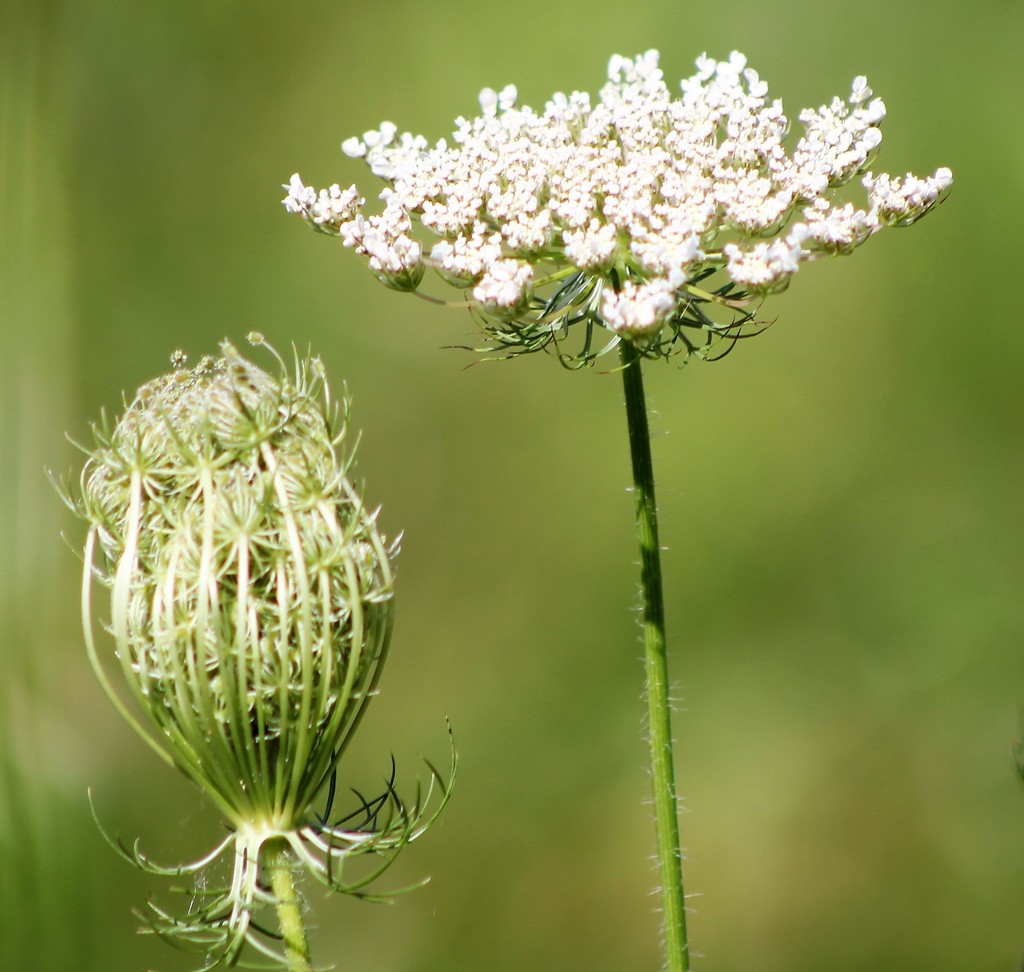
Daucus carota, commonly known as wild carrot or "Wilde Möhre", is a biennial plant belonging to the Apiaceae family, native to Europe and Asia. It is characterized by its finely divided leaves and white flower umbels, often featuring a small dark purple flower at the center, which gives it a delicate and ethereal appearance. It is ideal for naturalistic gardens, wild meadows, or as a border plant, adding wild beauty and attracting pollinators.
Native range
Europe and temperate Asia
Care tips
It prefers full sun to partial shade exposure and well-drained soils, preferably sandy or loamy. Watering should be moderate, allowing the substrate to dry out slightly between waterings, although it tolerates short periods of drought once established. Avoid very compact or heavy soils, as they can hinder the development of its taproot. A common mistake is confusing it with other Apiaceae species, so accurate identification is recommended if culinary use is intended.
How to save a dying Wild carrot
- Warning signs
- Yellowish or reddish leaves, weak and drooping stems, stunted growth.
- First aid
- Transplant to full sun and well-drained soil. Moderate watering, avoid waterlogging.
- What kills it
- Excessive shade, heavy clay soil, or lack of drainage rotting its roots.
- Can it be saved?
- Yes, if roots are not completely rotted and conditions are corrected.