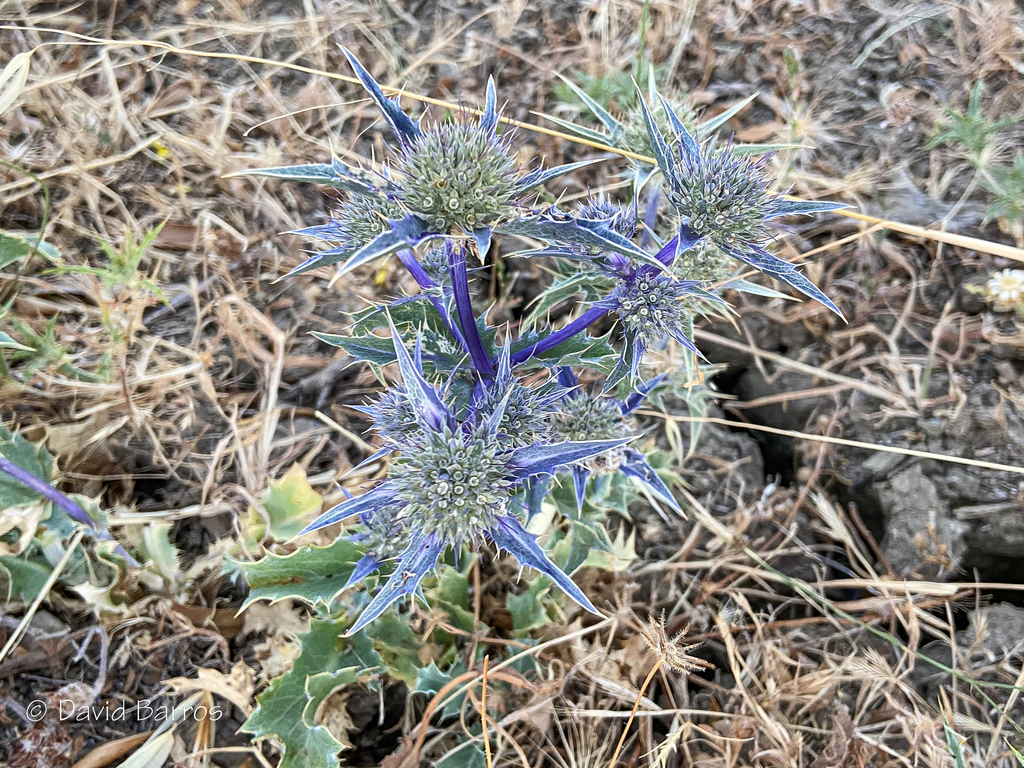
Sea holly (Eryngium aquifolium)
Care, watering, light and tips for Sea holly on Floravia.
Quick facts
- Family: Apiaceae
- Difficulty: Easy to care for
- Watering: every 10 days
- Light: Partial shade
- Temperature: 10–30 °C
About Sea holly
Eryngium aquifolium, commonly known as Holly Thistle, is a robust perennial plant from the Apiaceae family, valued for its spiny, leathery leaves reminiscent of holly and its metallic blue, cone-shaped flowers. Its architectural structure and drought resistance make it ideal for rock gardens, xeriscapes, or as a focal point in dry flower beds. It adds a rustic and wild touch to any landscape, especially in Mediterranean climates.
Native range
Coastal regions of Western and Central Europe, from Southern Norway down to Spain and Portugal.
Care tips
It requires full sun for optimal growth and abundant flowering, tolerating some partial shade in very hot climates. It is extremely drought-tolerant once established, so watering should be sparse; overwatering is the most common mistake to avoid, as it can lead to root rot. It prefers well-drained, sandy or stony soils, and is not demanding regarding nutrients. No regular pruning is needed, but spent flowers can be removed to encourage a second flush of blooms or to maintain aesthetics.
How to save a dying Sea holly
- Warning signs
- Soft, yellowing, or blackening leaves at the base indicate excess moisture. Dry, brittle tips can be lack of water or sun.
- First aid
- If soft, reduce watering and improve drainage. If dry, hydrate gradually. Move to a spot with full sun and good ventilation.
- What kills it
- Overwatering is its nemesis. Lack of direct sun and poor drainage also weaken it fatally.
- Can it be saved?
- Yes, if roots aren't completely rotted or stem isn't mushy. Act quickly with changes in watering and exposure.