Eryngium carlinae
Care, watering, light and tips for Eryngium carlinae on Floravia.
Quick facts
- Family: Apiaceae
- Difficulty: Easy to care for
- Watering: every 7 days
- Light: Partial shade
- Temperature: 10–30 °C
About Eryngium carlinae
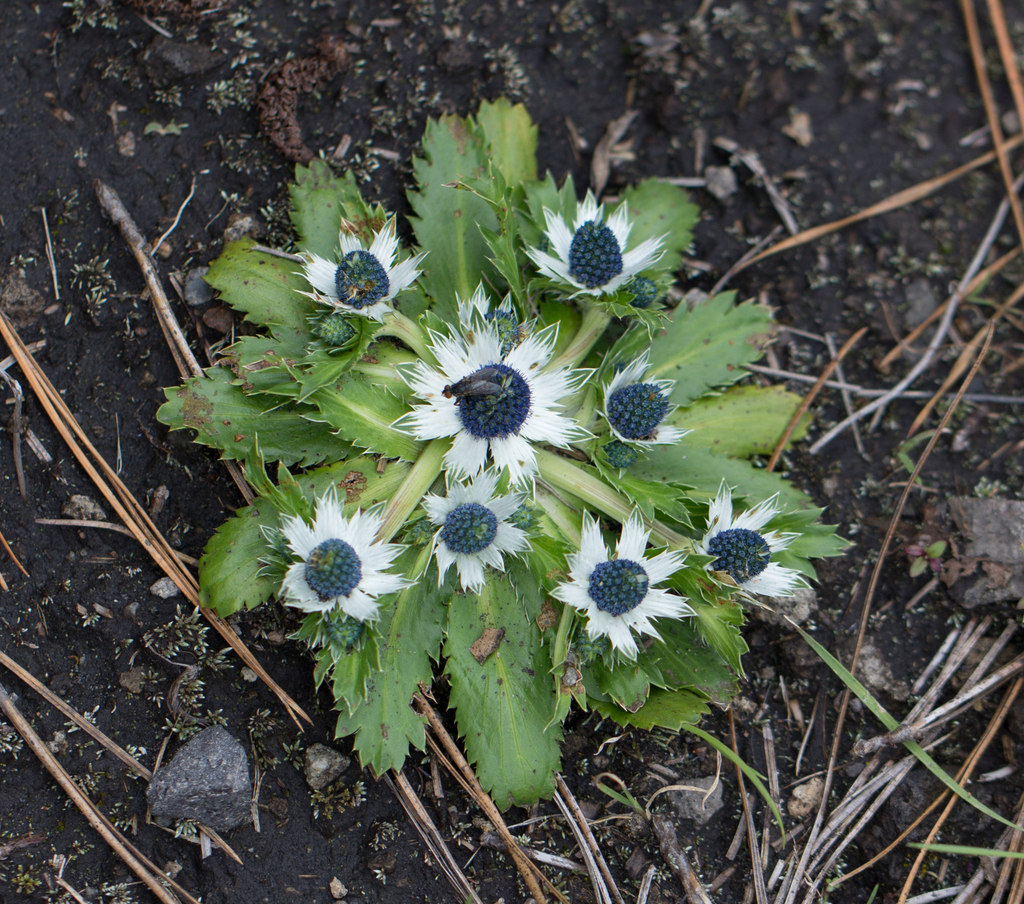
Eryngium carlinae, commonly known as gravatá, is a perennial plant from the Apiaceae family, valued for its spiny, metallic-blue inflorescences. Its basal leaves are lobed and grayish-green, forming an attractive rosette. It is ideal for rock gardens, dry borders, or as part of floral arrangements seeking an architectural and low-maintenance touch.
Native range
Argentina, Uruguay, and southern Brazil
Care tips
It requires full sun to develop its most intense coloration and abundant flowering. Watering should be moderate, allowing the substrate to dry out completely between waterings, as it is very drought-tolerant. It prefers well-drained, sandy, or stony soils, and the common mistake to avoid is overwatering, especially in winter, which can lead to root rot.
How to save a dying Eryngium carlinae
- Warning signs
- Wilted or yellowing leaves from the base, soft stems, poor or no flowering. Soft, dark, foul-smelling roots.
- First aid
- Remove plant from substrate. Examine roots, cut rotten parts with sterilized tool. Apply mild fungicide, repot in dry, well-draining substrate. Water only when substrate is completely dry.
- What kills it
- Overwatering. Eryngium carlinae is very sensitive to constant root moisture, which quickly leads to rot.
- Can it be saved?
- Yes, if you act quickly when detecting the first signs of rot or wilting due to waterlogging.