Scots lovage (Ligusticum scothicum)
Care, watering, light and tips for Scots lovage on Floravia.
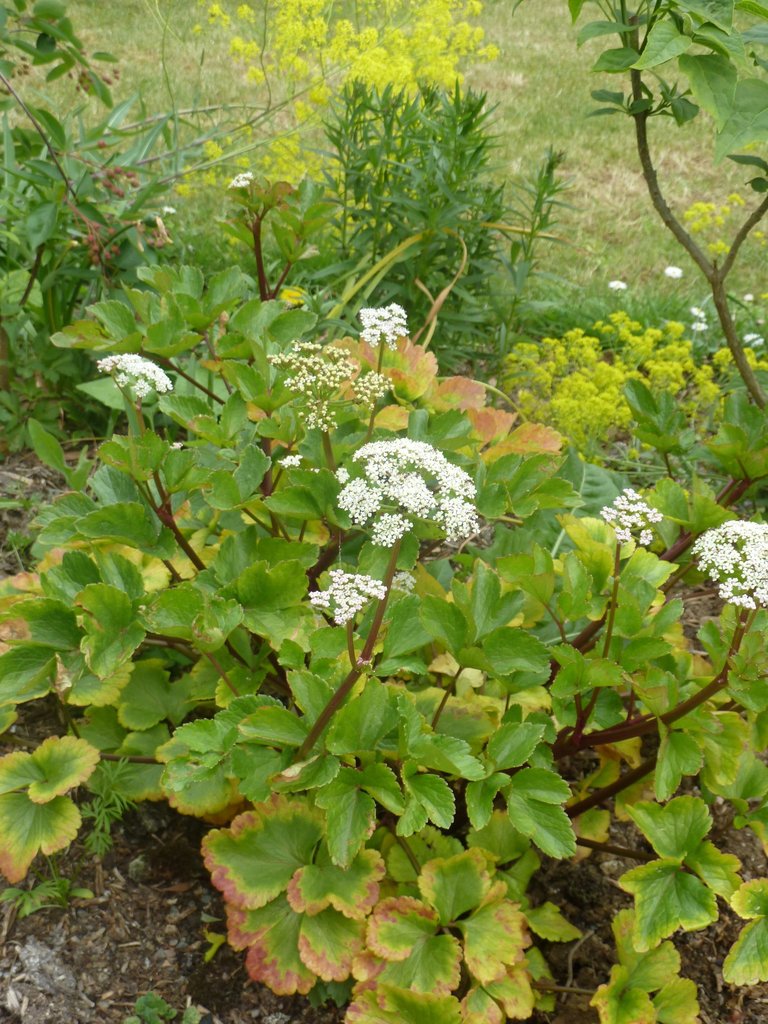
Quick facts
- Family: Apiaceae
- Difficulty: Moderate care
- Watering: every 7 days
- Light: Partial shade
- Temperature: 10–30 °C
About Scots lovage
Ligusticum scothicum, commonly known as Scots lovage or strandkjeks in Norwegian, is a robust perennial plant belonging to the Apiaceae family, found on rocky North Atlantic coastlines. It features erect stems, glossy, divided leaves, and white flower umbels that emerge in summer, resembling wild fennel. Its wild appearance and salt tolerance make it ideal for coastal gardens, rockeries, or as an ornamental plant in challenging conditions.
Native range
North Atlantic coasts, including Scandinavia, Iceland, Greenland, and northeastern North America.
Care tips
This plant thrives in full sun to partial shade, preferring sandy, well-drained soils, ideally with some salinity. It is highly drought-tolerant once established but will appreciate moderate watering during prolonged dry spells, avoiding waterlogging. A common mistake is attempting to grow it in rich, heavy soils or indoors, where it will not replicate its natural coastal conditions. It toler tolerates coastal winds well and does not require frequent fertilization.
How to save a dying Scots lovage
- Warning signs
- Yellowish or brown, wilting, soft leaves. Stunted growth. Rot at the base.
- First aid
- Remove damaged leaves, check drainage and soil moisture. Ensure good ventilation.
- What kills it
- Overwatering and compacted soil, suffocating its roots. Lack of adequate light.
- Can it be saved?
- Yes, if roots are not completely rotted. Requires quick action.