Broad-leaved pondweed (Potamogeton natans)
Care, watering, light and tips for Broad-leaved pondweed on Floravia.
Quick facts
- Family: Potamogetonaceae
- Difficulty: Moderate care
- Watering: every 7 days
- Light: Partial shade
- Temperature: 10–30 °C
About Broad-leaved pondweed
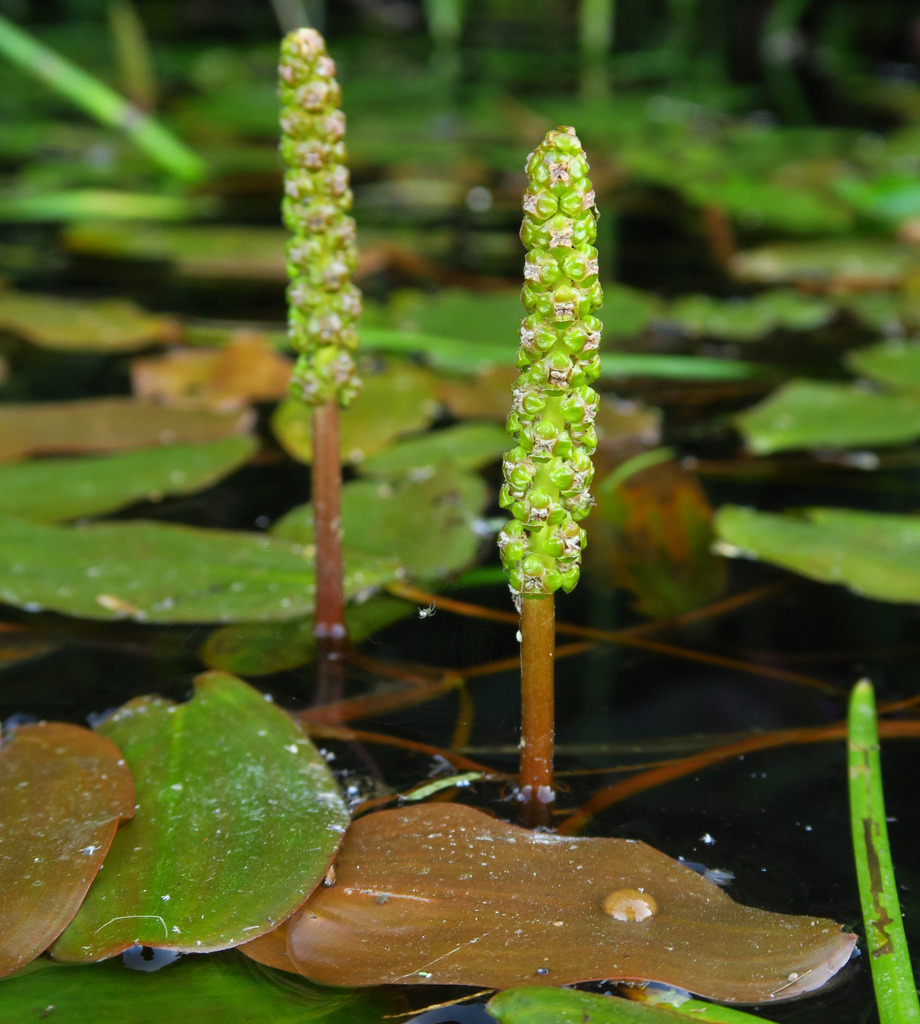
Potamogeton natans, commonly known as floating pondweed or broad-leaved pondweed, is a perennial aquatic plant that forms dense mats of oval, floating leaves on the water's surface, with finer submerged leaves. Its flexible stems and inconspicuous flower spikes make it ideal for natural ponds, lakes, and slow-moving water bodies, contributing a serene and ecological appearance. It is excellent for providing shelter to aquatic fauna and helping to maintain water clarity.
Native range
Europe, Asia, Africa, and North America
Care tips
It requires full sun or partial shade for optimal growth and prefers still or very slow-moving water. No watering is needed, as it is a submerged and floating aquatic plant. It establishes best in muddy or nutrient-rich substrates at the bottom of the pond, at depths between 30 cm and 3 meters. A common mistake is trying to cultivate it in small pots or in waters with strong currents, which will inhibit its development.
How to save a dying Broad-leaved pondweed
- Warning signs
- Submerged leaves rotting, brown or yellow spots, lack of floating leaf growth.
- First aid
- Ensure clean, fresh, pollutant-free water. Check depth, it needs to anchor and float.
- What kills it
- Water contamination (chemicals, excess nutrients) or lack of direct sunlight for floating leaves.
- Can it be saved?
- Yes, if water quality is corrected and adequate light is provided. Remove heavily damaged parts.