Curly-leaf pondweed (Potamogeton crispus)
Care, watering, light and tips for Curly-leaf pondweed on Floravia.
Quick facts
- Family: Potamogetonaceae
- Difficulty: Moderate care
- Watering: every 7 days
- Light: Partial shade
- Temperature: 10–30 °C
About Curly-leaf pondweed
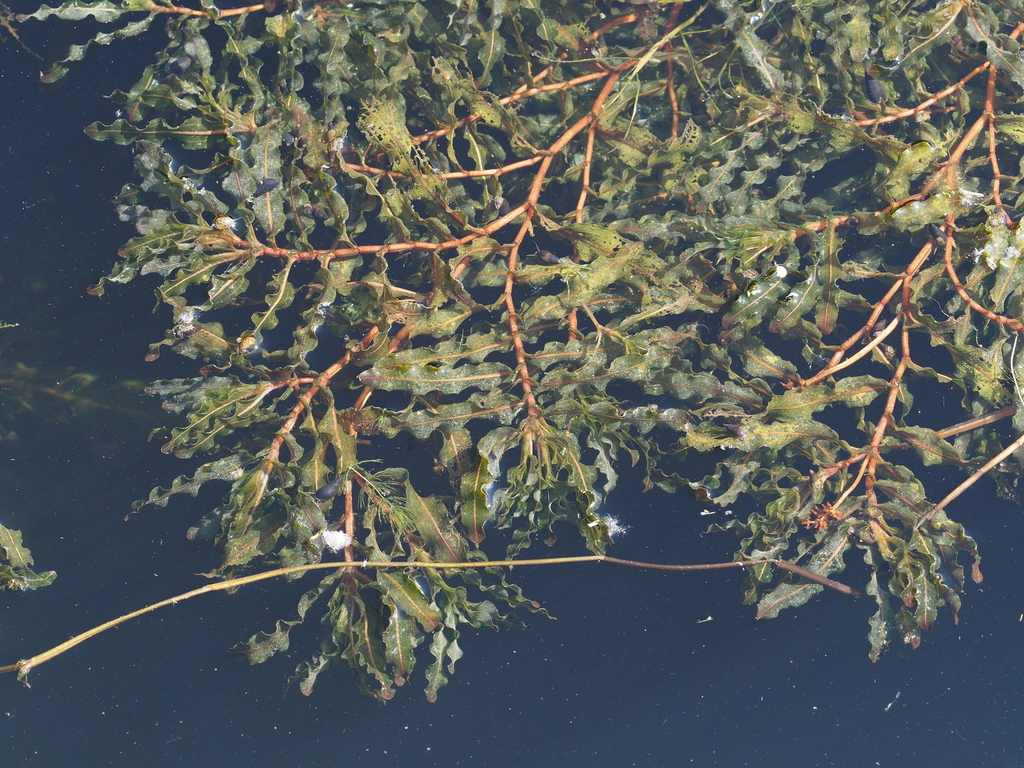
Potamogeton crispus, commonly known as curly pondweed or crispate pondweed, is a perennial submerged aquatic plant characterized by its wavy, serrated, dark green to reddish leaves. It is ideal for cold water aquariums or ponds, where it forms dense stands providing shelter and food for aquatic wildlife. Its vigorous growth makes it an excellent natural water oxygenator.
Native range
Europe, Asia, Africa, and Australia
Care tips
It requires moderate to high light for optimal growth and can tolerate a wide range of water temperatures, though it prefers cooler waters. It doesn't need a specific substrate, as it can root in sandy or muddy bottoms, but it benefits from a nutrient-rich substrate if grown in a pot. It is crucial to control its proliferation, as it can become invasive in favorable environments; regular pruning helps keep it in check.
How to save a dying Curly-leaf pondweed
- Warning signs
- Pale or yellowing leaves, soft stems, lack of growth, or root rot.
- First aid
- Check water quality, temperature (10-25°C ideal), and nutrients. Ensure good oxygenation and adequate, indirect light.
- What kills it
- Stagnant, very warm water, or excess nutrients (algae). Also, lack of anchoring causing it to float.
- Can it be saved?
- Yes, if roots are not completely rotted. Improve aquatic environment and light; it can regrow.