Longleaf pondweed (Potamogeton nodosus)
Care, watering, light and tips for Longleaf pondweed on Floravia.
Quick facts
- Family: Potamogetonaceae
- Difficulty: Demanding
- Watering: every 7 days
- Light: Partial shade
- Temperature: 10–30 °C
About Longleaf pondweed
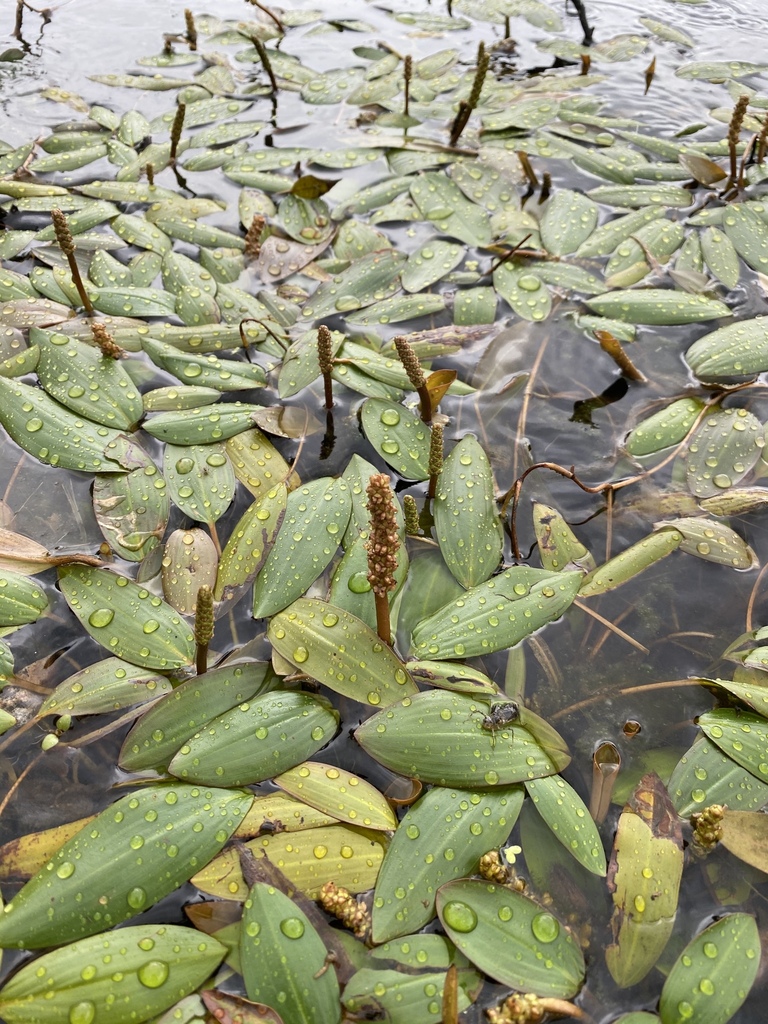
Potamogeton nodosus, commonly known as Longleaf Pondweed, is a perennial aquatic plant featuring both submerged and floating leaves, belonging to the Potamogetonaceae family. It is characterized by its elliptical or lance-shaped floating leaves and narrower submerged leaves, which can reach up to 30 cm in length. This plant is ideal for ponds, slow-moving water bodies, and large aquariums, where it can anchor to the substrate and contribute to oxygenation and aquatic wildlife habitat.
Native range
North America, Central America, South America, Europe, Asia, and Africa.
Care tips
This plant thrives in full to partial sunlight and prefers still or slow-moving water, with a depth ranging from 30 cm to 2 meters. The substrate should be nutrient-rich, ideally silty or clayey at the bottom of the pond. No watering is needed as it lives entirely in water, but ensuring good water quality and avoiding pollution are crucial. A common mistake is introducing it into water bodies with strong currents, which can hinder its rooting and growth.
How to save a dying Longleaf pondweed
- Warning signs
- Yellowish or whitish leaves, soft or disintegrating stems.
- First aid
- Check water quality (pH, nutrients). Remove damaged parts. Ensure proper anchoring.
- What kills it
- Turbid water, nutrient deficiency, extreme temperature fluctuations or strong currents.
- Can it be saved?
- Yes, if water quality is corrected and a stable environment is provided quickly.