Sea fig (Carpobrotus aequilaterus)
Care, watering, light and tips for Sea fig on Floravia.
Quick facts
- Family: Aizoaceae
- Difficulty: Easy to care for
- Watering: every 10 days
- Light: Partial shade
- Temperature: 10–30 °C
About Sea fig
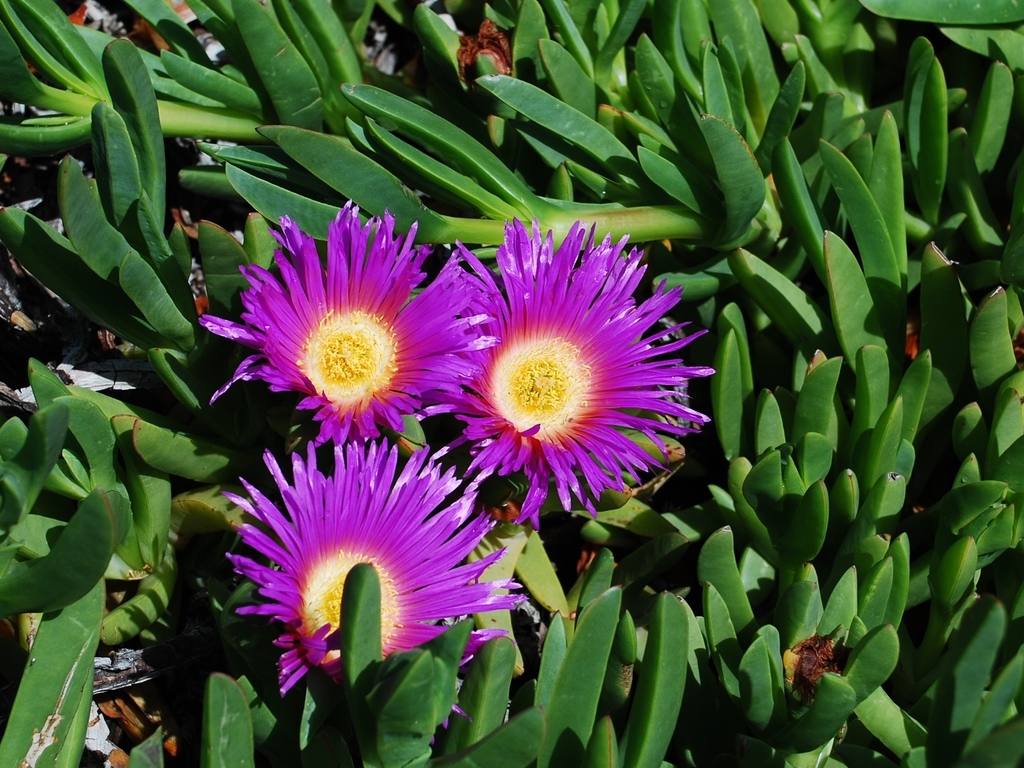
Carpobrotus aequilaterus, commonly known as 'sea-fig' or 'ice plant', is a fast-growing, sprawling succulent native to the coasts of California and Chile. Its fleshy stems and triangular leaves form dense, bright green mats, adorned with pink-purple or yellow flowers. It is ideal for covering large areas, stabilizing dunes, or as a trailing plant in pots where its foliage and flowers can cascade gracefully.
Native range
Native to the coasts of California and Oregon in North America.
Care tips
This species thrives in full sun, requiring at least 6 hours of direct light for optimal flowering. It is extremely drought-tolerant once established; water sparingly, only when the substrate is completely dry. It prefers well-drained soils, even sandy or rocky ones, and does not tolerate waterlogging, which is its main enemy. Avoid overwatering, as it can lead to root rot and plant death.
How to save a dying Sea fig
- Warning signs
- Soft, wrinkled leaves lacking turgor; stems drying out and becoming brittle.
- First aid
- Remove dry parts. If potted, check drainage. Water deeply, but only when soil is dry.
- What kills it
- Overwatering, especially in heavy soils. Also complete lack of light or prolonged frosts.
- Can it be saved?
- Yes! It's very resilient. With good drainage and moderate watering, it usually recovers.