Living stone (Lithops francisci)
Care, watering, light and tips for Living stone on Floravia.
Quick facts
- Family: Aizoaceae
- Difficulty: Demanding
- Watering: every 21 days
- Light: Partial shade
- Temperature: 10–30 °C
About Living stone
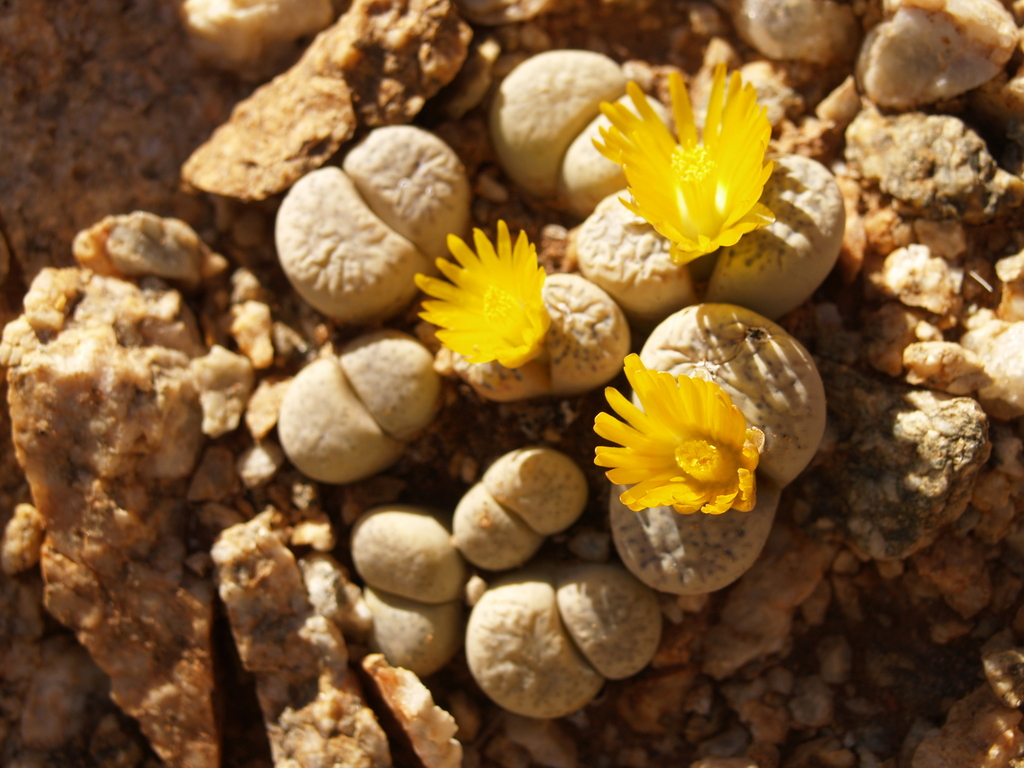
Lithops francisci, commonly known as 'living stone', is a captivating succulent native to Namibia, mimicking the rocks of its environment. Its two thick, fused leaves with a central fissure display patterns and colors ranging from gray to brown, featuring translucent 'windows'. This plant is ideal for succulent collections, desert terrariums, or as a focal point in small pots, adding an exotic and minimalist touch.
Native range
South Africa, in the Northern Cape province
Care tips
It requires intense, direct sunlight for most of the day to maintain its compact growth and prevent etiolation. Watering should be very sparse, only when the old leaves have completely reabsorbed and new ones are visible; a common mistake is overwatering, especially in winter. Use an extremely well-draining substrate, primarily composed of coarse sand and grit, with very little organic matter. Avoid watering during the summer 'dormancy' period and the formation of new leaves, as this can lead to rot.
How to save a dying Living stone
- Warning signs
- Excessive wrinkling and softening outside its molting period, or stretching for light. Dark spots or mold.
- First aid
- If soft and wrinkled, check substrate: if dry, water very lightly. If wet, stop watering and improve ventilation. If stretching, move to more direct light.
- What kills it
- Overwatering and non-draining substrate are the biggest killers. Watering during molting or dormancy is fatal. Lack of light also weakens it.
- Can it be saved?
- Yes, if roots aren't completely rotted or stem disintegrated. Act fast by correcting watering and sun exposure.