Living stone (Lithops schwantesii)
Care, watering, light and tips for Living stone on Floravia.
Quick facts
- Family: Aizoaceae
- Difficulty: Demanding
- Watering: every 14 days
- Light: Partial shade
- Temperature: 10–30 °C
About Living stone
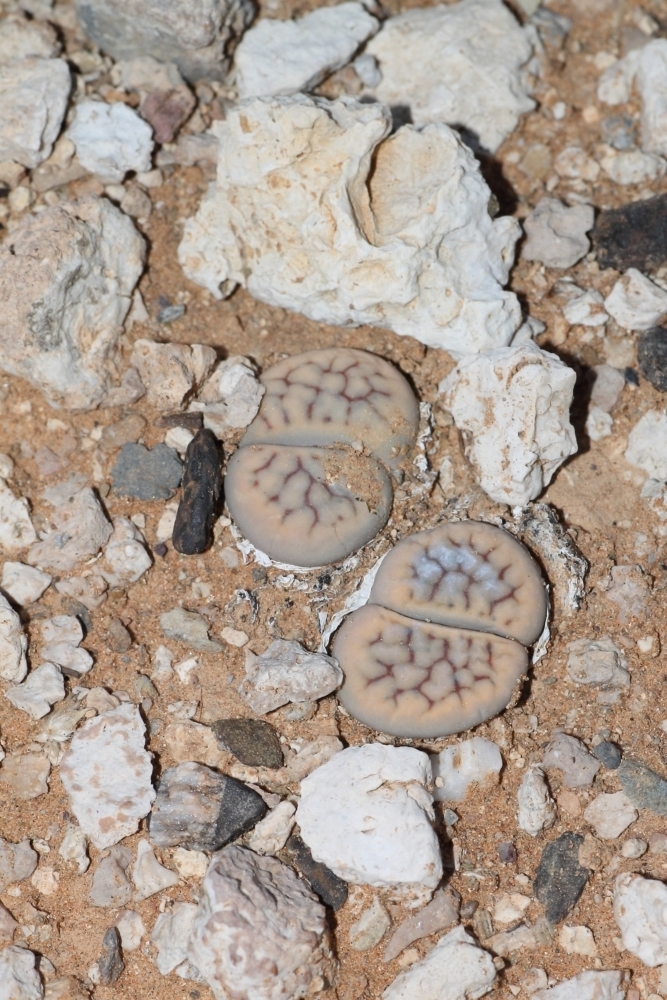
Lithops schwantesii, known as Schwantes' living stone, is a fascinating succulent native to South Africa, mimicking stones to camouflage itself in its arid environment. It features two fused fleshy leaves forming a conical or cylindrical body, with varied patterns and colors ranging from greenish-gray to brown and reddish hues. It's ideal for desert terrariums, succulent collections, or as a unique accent in small pots, adding an exotic and minimalist touch.
Native range
South Africa and Namibia
Care tips
It requires bright, direct sunlight for most of the day to maintain its coloration and compact shape. Watering should be extremely sparse and only when the old leaves have completely dried out, generally from late spring to early autumn, avoiding any watering during winter and the 'shedding' stage (when new leaves emerge). Use a very well-draining substrate, such as a specific cactus and succulent mix with plenty of pumice or perlite, and avoid overwatering at all costs, as it is the most common cause of rot.
How to save a dying Living stone
- Warning signs
- Deep, soft wrinkling; dark discoloration; mushy appearance; leaves rotting from the base.
- First aid
- Remove plant from soil, inspect roots and base for rot. Cut affected parts with sterile tool. Air dry for a few days before repotting in dry, very well-draining substrate.
- What kills it
- Overwatering is the number one killer of Lithops. Also, lack of intense, direct light weakens them and makes them disease-prone.
- Can it be saved?
- Yes, if rot hasn't affected the central stem or most leaves. Quick action at the first sign of trouble is crucial.