Living stones (Lithops hallii)
Care, watering, light and tips for Living stones on Floravia.
Quick facts
- Family: Aizoaceae
- Difficulty: Demanding
- Watering: every 14 days
- Light: Partial shade
- Temperature: 10–30 °C
About Living stones
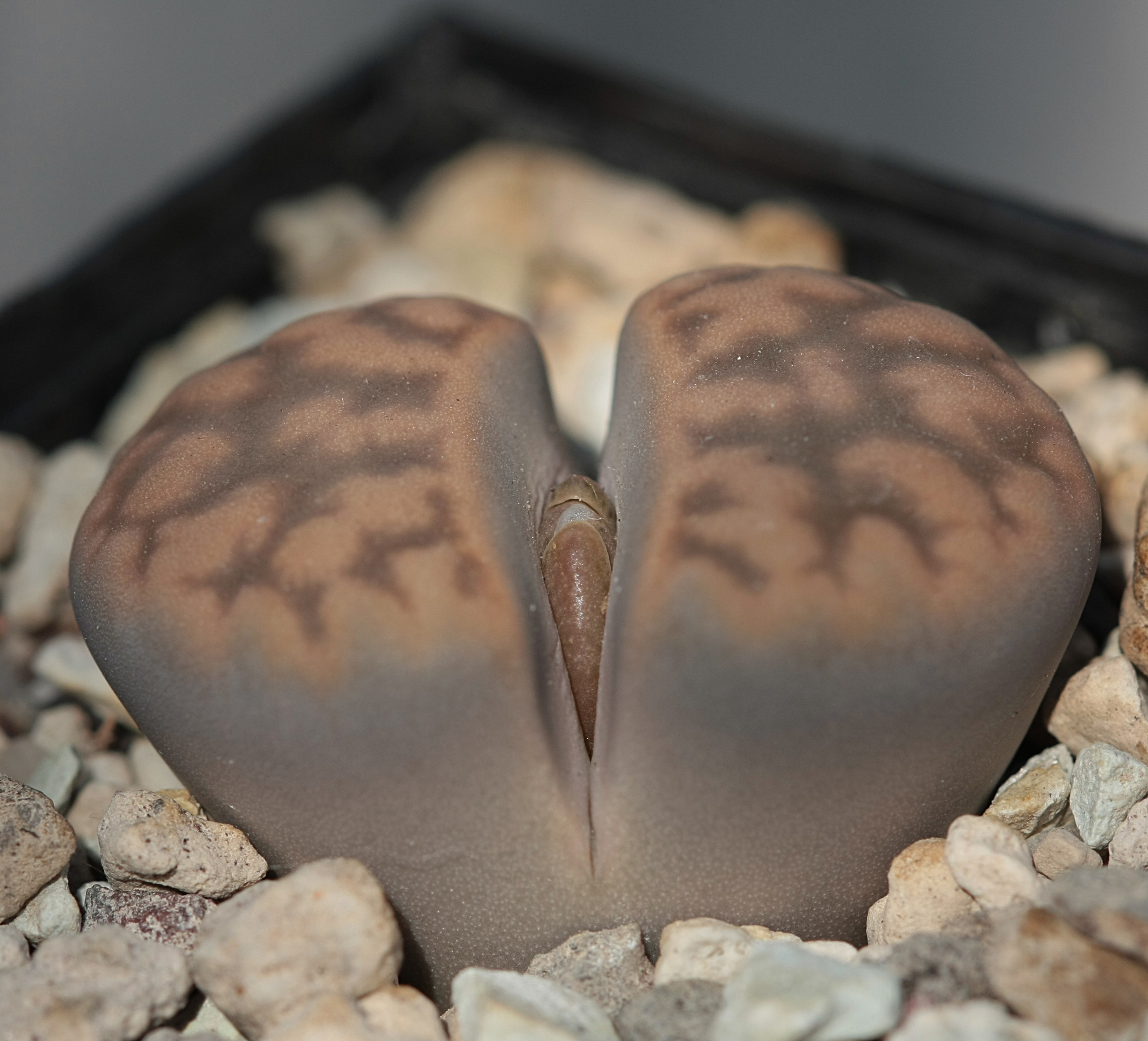
Lithops hallii, commonly known as knölstenblad, is a fascinating succulent plant mimicking stones, featuring two fleshy, grayish to reddish-brown leaves with intricate patterns. Native to South Africa, it blooms in autumn with white or yellow flowers emerging from the central fissure. It's ideal for succulent collections, desert terrariums, or as an accent plant in small pots, where its natural camouflage is a visual delight.
Native range
South Africa and Namibia
Care tips
It requires direct, intense sunlight for most of the day to maintain its compact growth and prevent etiolation. Watering should be extremely sporadic: only when the old leaves shrivel and new ones emerge (typically in autumn and winter), avoiding water during summer and when leaves are splitting. Use a very well-draining substrate, such as a specific Lithops or cactus mix with high mineral and coarse sand content. The most common mistake is overwatering, which leads to rapid rot, so it's better to err on the side of dry than wet.
How to save a dying Living stones
- Warning signs
- Deep wrinkles and limpness (underwatering), soft spots or rot at base (overwatering).
- First aid
- If wrinkled, soak pot 15 min. If soft, remove, clean roots, air dry 1-2 days before repotting in dry substrate.
- What kills it
- Excessive watering outside its cycle, especially in summer or winter. Moisture-retentive substrate.
- Can it be saved?
- Yes, if rot is not too advanced and you act quickly. Dehydration is easier to reverse.