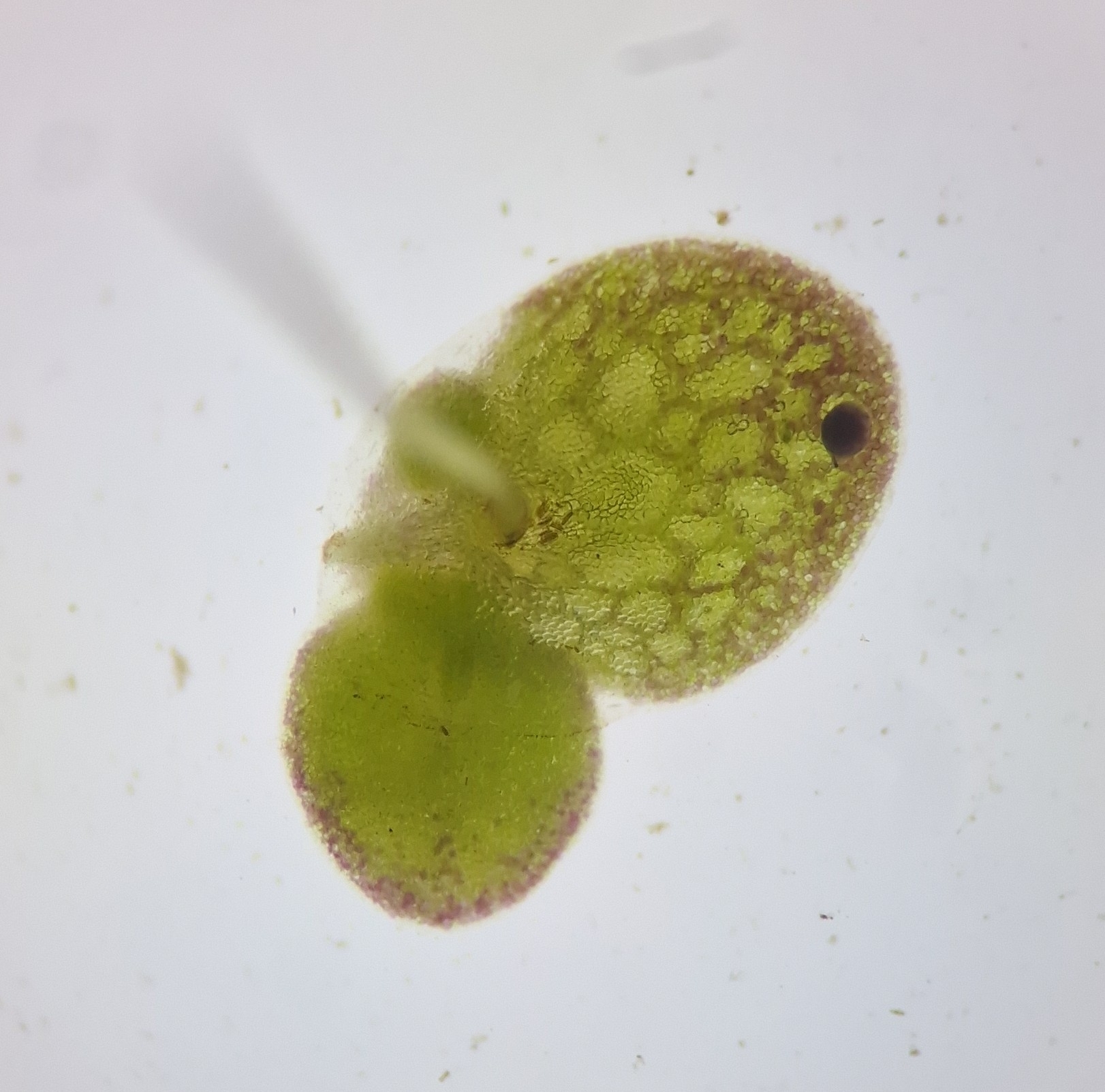
Fat duckweed (Lemna gibba)
Care, watering, light and tips for Fat duckweed on Floravia.
Quick facts
- Family: Araceae
- Difficulty: Easy to care for
- Watering: every 7 days
- Light: Indirect light
- Temperature: 15–30 °C
About Fat duckweed
Lemna gibba, commonly known as swollen duckweed, is a floating aquatic plant from the Araceae family, characterized by its small, round fronds with a distinctively swollen underside, giving it a globular appearance. It forms dense green mats on the water's surface, making it ideal for ponds, aquariums, or any stagnant water body, where it provides shade and shelter. Its rapid growth makes it an excellent choice for bioremediation and as food for herbivorous fish.
Native range
Cosmopolitan, found in nearly all temperate and tropical regions worldwide.
Care tips
This duckweed thrives in bright direct or indirect sunlight and tolerates a wide range of temperatures, though it prefers temperate waters. It requires no substrate as it floats freely, absorbing nutrients directly from the water; maintaining adequate nutrient levels is crucial for optimal growth. The primary care involves managing its proliferation, as it can quickly cover the entire water surface, blocking light from other aquatic plants. Avoid nutrient deficiency in the water, which can slow its growth and reduce its vitality.
How to save a dying Fat duckweed
- Warning signs
- Pale, yellowish, or whitish leaves, disintegrating or rotting. Drastic population decrease.
- First aid
- Remove rotten bits. Ensure bright indirect light, still, chlorine-free water. Check nutrients.
- What kills it
- Moving water or chlorinated/chemical water. Lack of essential nutrients or insufficient light.
- Can it be saved?
- Yes! Very resilient. With quick adjustments to water and light, it recovers easily.