Peach palm (Bactris gasipaes)
Care, watering, light and tips for Peach palm on Floravia.
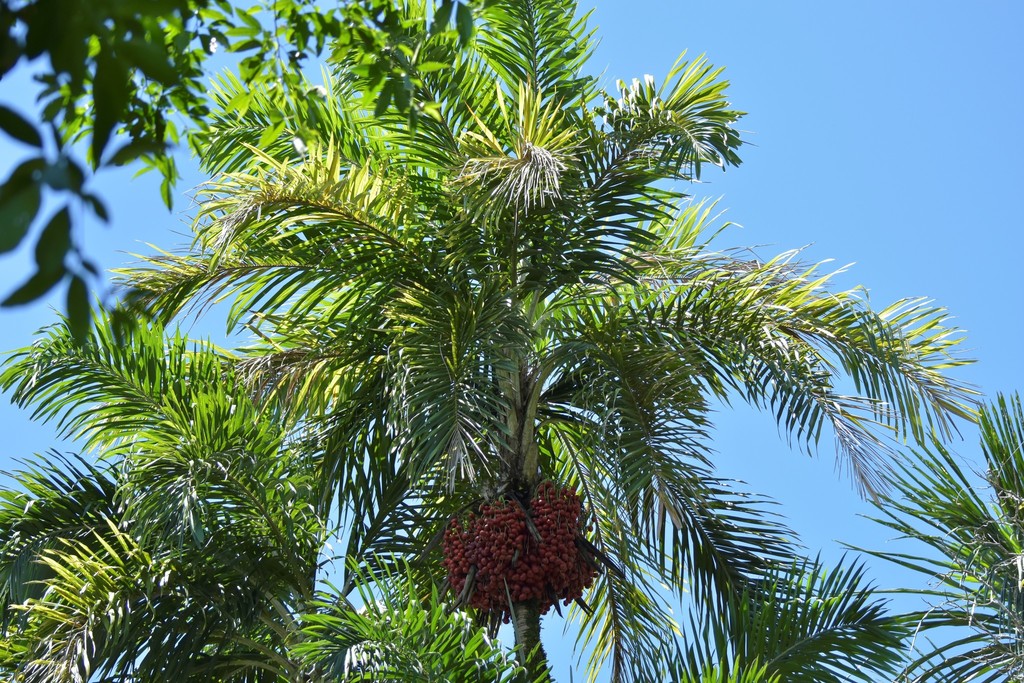
Quick facts
- Family: Arecaceae
- Difficulty: Moderate care
- Watering: every 7 days
- Light: Full sun
- Temperature: 15–40 °C
About Peach palm
Bactris gasipaes, commonly known as Peach Palm or Chontaduro, is a medium to large tropical palm, valued for its edible fruits and resilience. It features a spiny trunk and pinnate leaves, adding an exotic and productive touch to tropical and subtropical gardens. It is ideal for home orchards or as an ornamental specimen in expansive landscapes, where its distinctive silhouette can be fully appreciated.
Native range
Tropical regions of South and Central America, particularly the Amazon basin
Care tips
It requires full sun for optimal fruiting, although it tolerates some partial shade. Watering should be regular and abundant, especially during dry periods, ensuring good drainage to prevent waterlogging. It prefers rich, well-drained, and slightly acidic to neutral soils. A common mistake is lack of space, as this palm needs a considerable area to develop fully without competing with other plants.
How to save a dying Peach palm
- Warning signs
- Yellowish or brown leaves, especially young ones, stunted growth, rot at the trunk base or new shoots. 🌿
- First aid
- Check drainage and soil moisture. If waterlogged, repot with lighter substrate. If dry, water deeply. Ensure good indirect light.
- What kills it
- Constant waterlogging is its worst enemy, causing root rot and suffocation. Also lack of light or extreme cold.
- Can it be saved?
- Yes, if you act quickly. If rot hasn't advanced far into the trunk, there's hope. Prune damaged parts and optimize conditions.