Solitaire palm (Ptychosperma elegans)
Care, watering, light and tips for Solitaire palm on Floravia.
Quick facts
- Family: Arecaceae
- Difficulty: Moderate care
- Watering: every 4 days
- Light: Full sun
- Temperature: 15–40 °C
About Solitaire palm
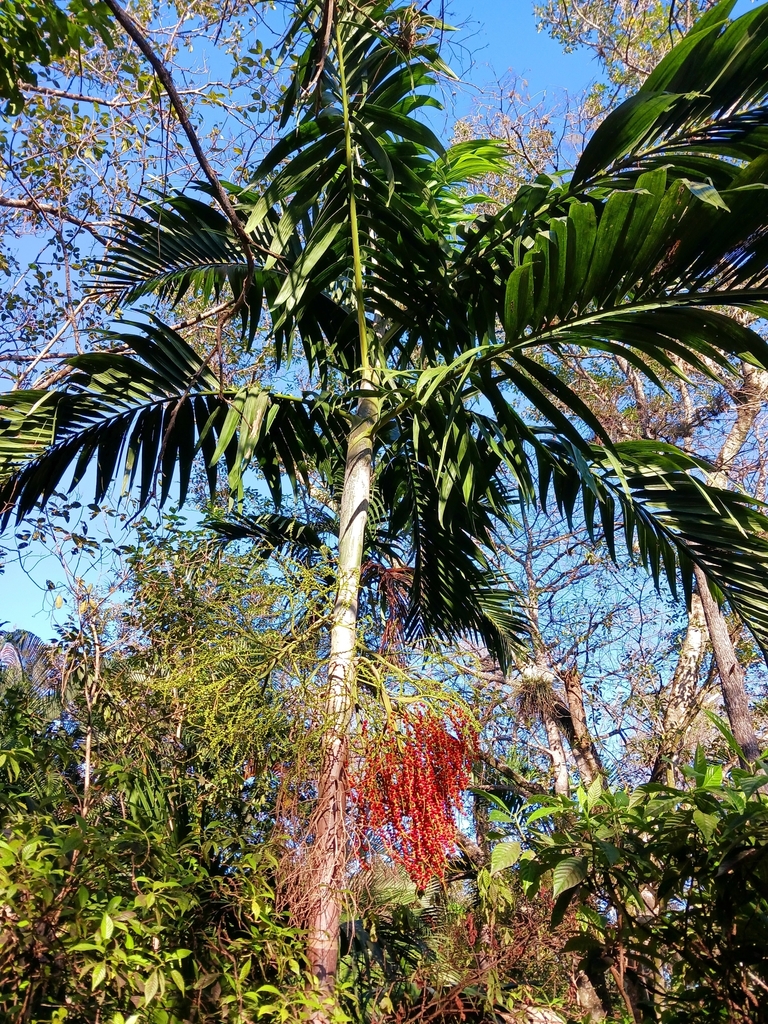
Ptychosperma elegans, commonly known as the Solitary Palm, is a medium-sized, slow-growing palm native to the rainforests of Queensland, Australia. It is characterized by its slender, ringed trunk, which can reach up to 10 meters in height, and a dense crown of bright green pinnate leaves. It is an excellent choice for small tropical gardens, patios, or as an indoor plant in spacious areas, providing vertical elegance and an exotic touch.
Native range
Northeastern Australia and Papua New Guinea
Care tips
It prefers bright indirect light or partial shade; avoid prolonged direct exposure to strong sun, especially in hot climates. Keep the substrate consistently moist, but not waterlogged, reducing watering frequency in winter. Use a substrate rich in organic matter and with good drainage. A common mistake is allowing the substrate to dry out completely, which can cause brown leaf tips and stress to the plant.
How to save a dying Solitaire palm
- Warning signs
- Lower leaves yellow or brown, wilted; dry and brittle tips; stunted growth. Often indicates water or nutrient stress.
- First aid
- Check drainage. If potted, ensure no waterlogging. Water deeply when topsoil is dry. Lightly fertilize with palm-specific food.
- What kills it
- Chronic overwatering or underwatering. Also lack of adequate light (needs direct sun or bright partial shade) or very low temperatures.
- Can it be saved?
- Yes, if roots aren't rotted. With correct watering, light, and nutrition, it can recover if damage isn't extreme. Patience and observation are key!