Sea daffodil (Pancratium maritimum)
Care, watering, light and tips for Sea daffodil on Floravia.
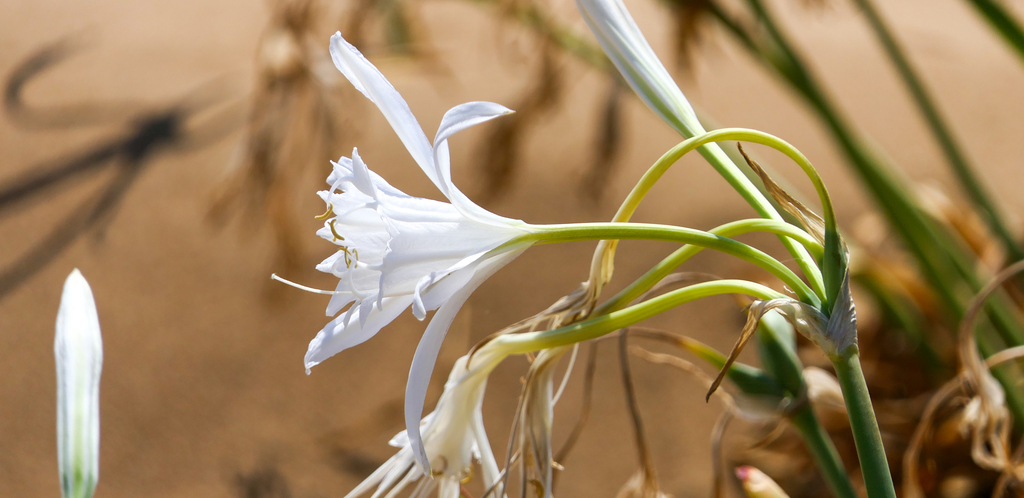
Quick facts
- Family: Amaryllidaceae
- Difficulty: Moderate care
- Watering: every 7 days
- Light: Partial shade
- Temperature: 10–30 °C
- Toxicity: Toxic to pets
About Sea daffodil
<i>Pancratium maritimum</i>, commonly known as the Sea Daffodil or Sea Lily, is a beautiful perennial bulbous plant that produces large, fragrant, trumpet-shaped white flowers. Its leaves are long, narrow, and glaucous green, emerging directly from the bulb. It is an exceptional choice for coastal gardens, rockeries, or sandy areas, where its exotic beauty can enhance the landscape.
Native range
Mediterranean region, including Southern Europe, North Africa, and the Middle East.
Care tips
It requires full sun for optimal flowering and sandy, well-drained soils, replicating its natural coastal dune habitat; it is crucial to avoid waterlogging. Watering should be moderate during its active growing period in spring and summer, drastically reducing or suspending it in autumn and winter. A common mistake to avoid is overwatering, especially in heavy soils, which can cause bulb rot. It is a drought and salt-tolerant plant, ideal for Mediterranean climates.
How to save a dying Sea daffodil
- Warning signs
- Yellowish or brown leaves from the tips, limp and weak appearance. Flowers that don't open or dry prematurely.
- First aid
- Move it to a sunny spot, but protected from strong winds. Check the substrate: if dry, water deeply. If potted, ensure good drainage. If in soil, improve aeration if it's too clayey.
- What kills it
- Excessive shade, lack of direct sun, or constantly wet, poorly drained substrate. Does not tolerate waterlogging or prolonged extreme cold.
- Can it be saved?
- Yes, if conditions are corrected quickly. It's a resilient plant once its light and drainage needs are met. There is hope!