Poison bulb (Crinum asiaticum)
Care, watering, light and tips for Poison bulb on Floravia.
Quick facts
- Family: Amaryllidaceae
- Difficulty: Easy to care for
- Watering: every 3 days
- Light: Partial shade
- Temperature: 10–30 °C
- Toxicity: Toxic to pets
About Poison bulb
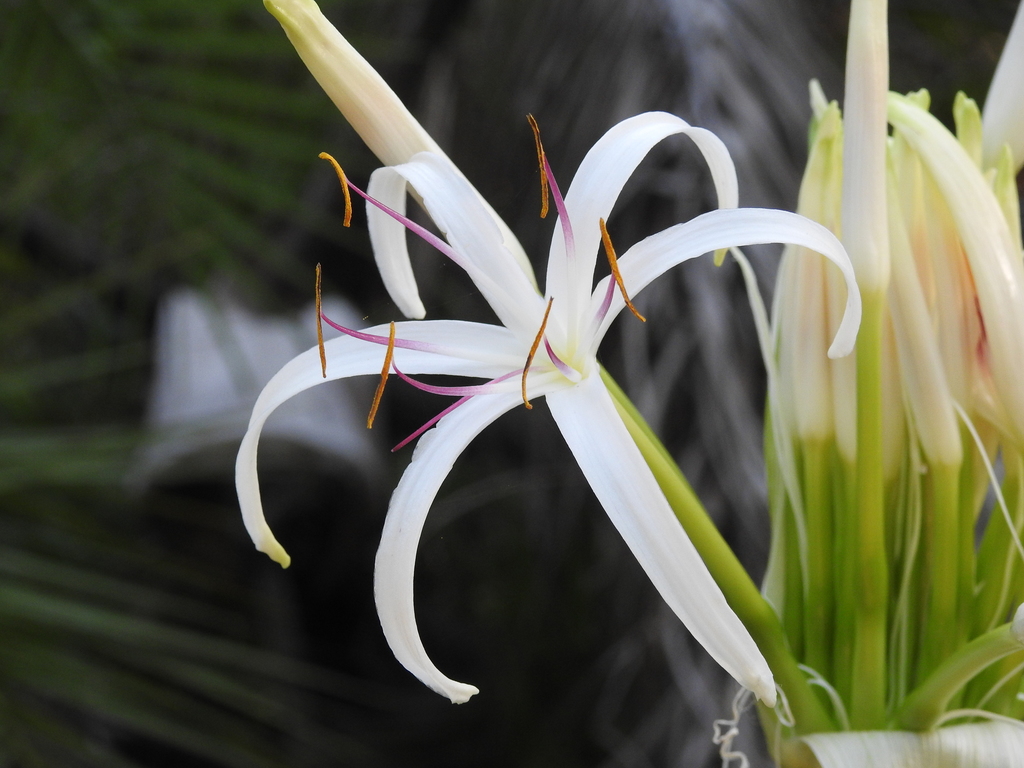
Crinum asiaticum, commonly known as Giant Spider Lily or Sari Dongolo Mena, is a perennial bulbous plant from the Amaryllidaceae family, native to tropical and subtropical regions of Asia. It is characterized by its large, glossy green lanceolate leaves and impressive flower stalks that emerge with clusters of fragrant white flowers, featuring narrow petals and long stamens, reminiscent of spider legs. This plant is ideal for adding a tropical and exotic touch to large gardens, patios, or as a focal point in spacious pots.
Native range
Tropical and subtropical Asia, including Southeast Asia, India, and southern China.
Care tips
It requires full sun to partial shade for optimal flowering, though it tolerates partial shade. It needs regular and abundant watering during the growing season, keeping the substrate consistently moist but well-drained; reduce watering in winter. It prefers rich, well-draining, slightly acidic to neutral soils. A common mistake is planting it in heavy, poorly draining soils, which can lead to bulb rot.
How to save a dying Poison bulb
- Warning signs
- Yellow or brown, soft leaves, soft, foul-smelling bulbs.
- First aid
- Remove bulb, inspect roots, cut off rot. Replant in well-draining soil.
- What kills it
- Overwatering and poor drainage, leading to bulb rot.
- Can it be saved?
- Yes, if the the bulb is not completely rotted and action is taken quickly.