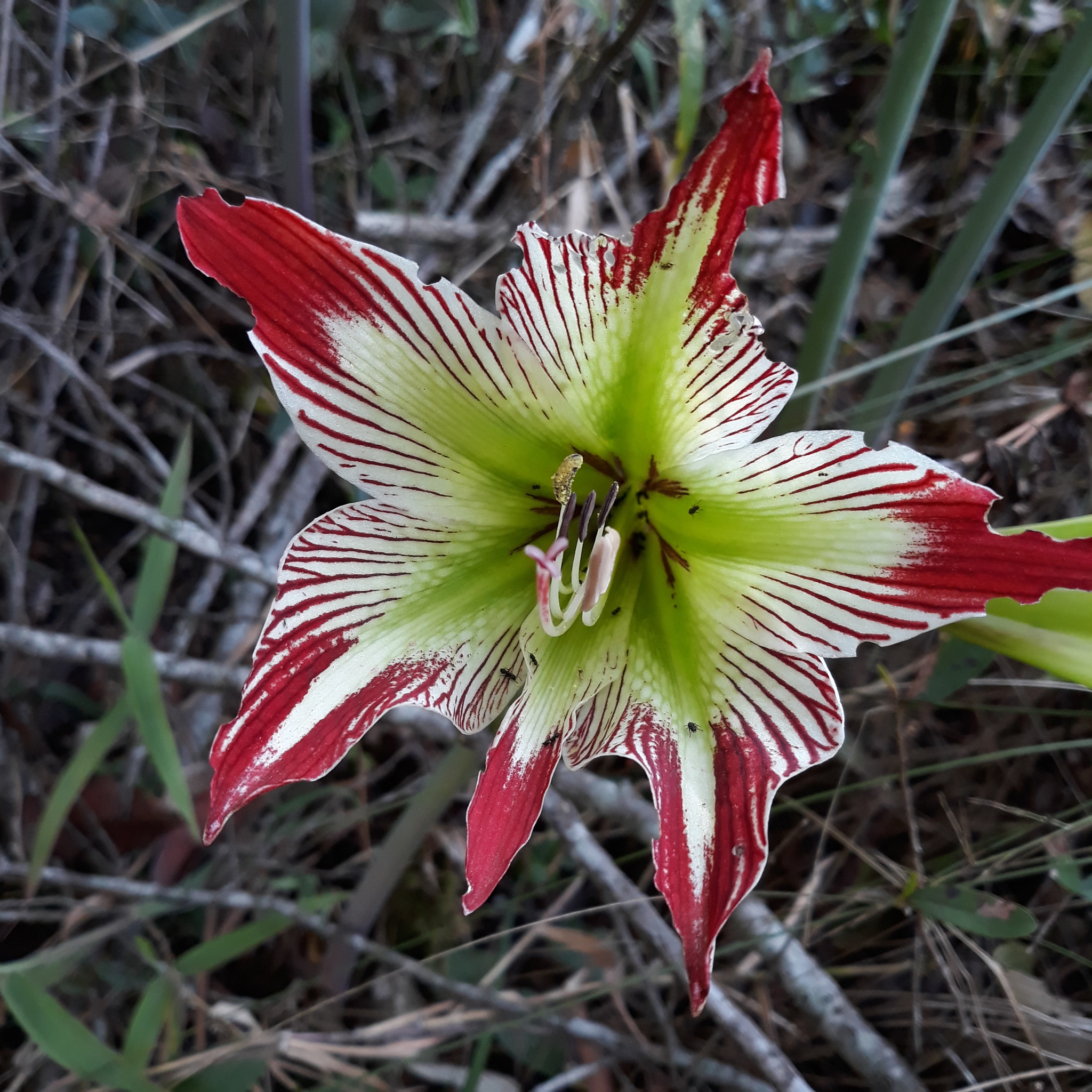
Parrot amaryllis (Hippeastrum psittacinum)
Care, watering, light and tips for Parrot amaryllis on Floravia.
Quick facts
- Family: Amaryllidaceae
- Difficulty: Moderate care
- Watering: every 7 days
- Light: Partial shade
- Temperature: 10–30 °C
- Toxicity: Toxic to pets
About Parrot amaryllis
Hippeastrum psittacinum, commonly known as parrot amaryllis, is an ornamental bulbous species from the Amaryllidaceae family, native to Brazil. It stands out for its exotic flowers with narrow, recurved petals, often featuring green and red stripes reminiscent of a parrot's plumage. It is ideal for adding a vibrant, tropical touch to bright indoor spaces or gardens in warm climates.
Native range
Brazil
Care tips
It requires bright, indirect light; direct sunlight can scorch its leaves and flowers. Water moderately when the top layer of the substrate is dry, reducing watering during its dormancy period. Use a well-draining substrate rich in organic matter. A common mistake is overwatering during dormancy, which can lead to bulb rot.
How to save a dying Parrot amaryllis
- Warning signs
- Yellow or soft leaves, drooping stems, soft or moldy bulb. Lack of flowering is also a warning.
- First aid
- Remove dead leaves, check the bulb (if soft, cut off rot). Repot in fresh, well-draining substrate. Reduce watering.
- What kills it
- Overwatering is its main killer, rotting the bulb quickly. Also, lack of good drainage.
- Can it be saved?
- Yes! If the bulb is not completely rotted, there's hope. With good drainage and moderate watering, it can recover.