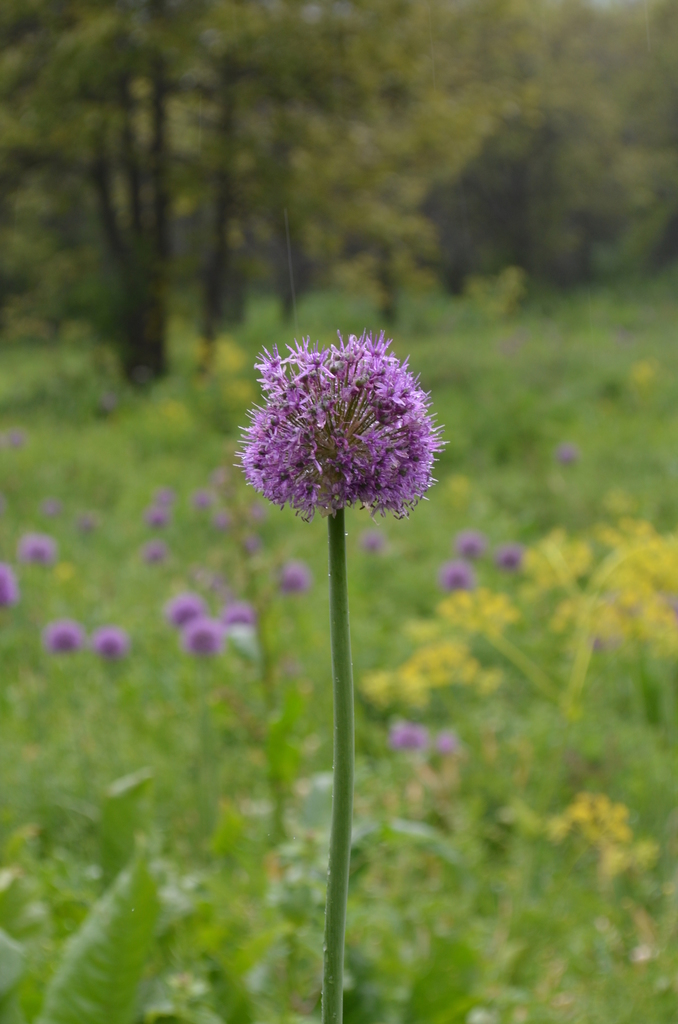
Persian onion (Allium aflatunense)
Care, watering, light and tips for Persian onion on Floravia.
Quick facts
- Family: Amaryllidaceae
- Difficulty: Easy to care for
- Watering: every 7 days
- Light: Partial shade
- Temperature: 10–30 °C
- Toxicity: Toxic to pets
About Persian onion
Allium aflatunense, commonly known as 'Globemaster' Allium or Dutch Allium, is a striking ornamental plant belonging to the Amaryllidaceae family. It is characterized by its large, dense, lavender-purple spherical flower heads that rise majestically on stiff, tall stems in spring. It is ideal for adding dramatic visual impact to garden borders, rockeries, or as a cut flower in floral arrangements.
Native range
Central Asia (primarily Kazakhstan, Uzbekistan, Tajikistan)
Care tips
It requires full sun exposure for optimal flowering, although it tolerates some partial shade. The soil should be well-drained, sandy or loamy, and it benefits from moderate watering during the active growing period, reducing it once the flowers fade. A common mistake to avoid is waterlogging, which can lead to bulb rot; ensure the substrate does not retain too much moisture.
How to save a dying Persian onion
- Warning signs
- Yellowish or soft leaves, drooping stems, moldy or rotten bulbs.
- First aid
- Remove bulb, trim damaged parts, replant in dry, well-draining substrate. Reduce watering.
- What kills it
- Overwatering, especially in winter or poor drainage, quickly rots the bulb.
- Can it be saved?
- Yes, if the bulb is not completely rotted. Act quickly at the first sign.