Narcissus cantabricus
Care, watering, light and tips for Narcissus cantabricus on Floravia.
Quick facts
- Family: Amaryllidaceae
- Difficulty: Easy to care for
- Watering: every 7 days
- Light: Partial shade
- Temperature: 10–30 °C
- Toxicity: Toxic to pets
About Narcissus cantabricus
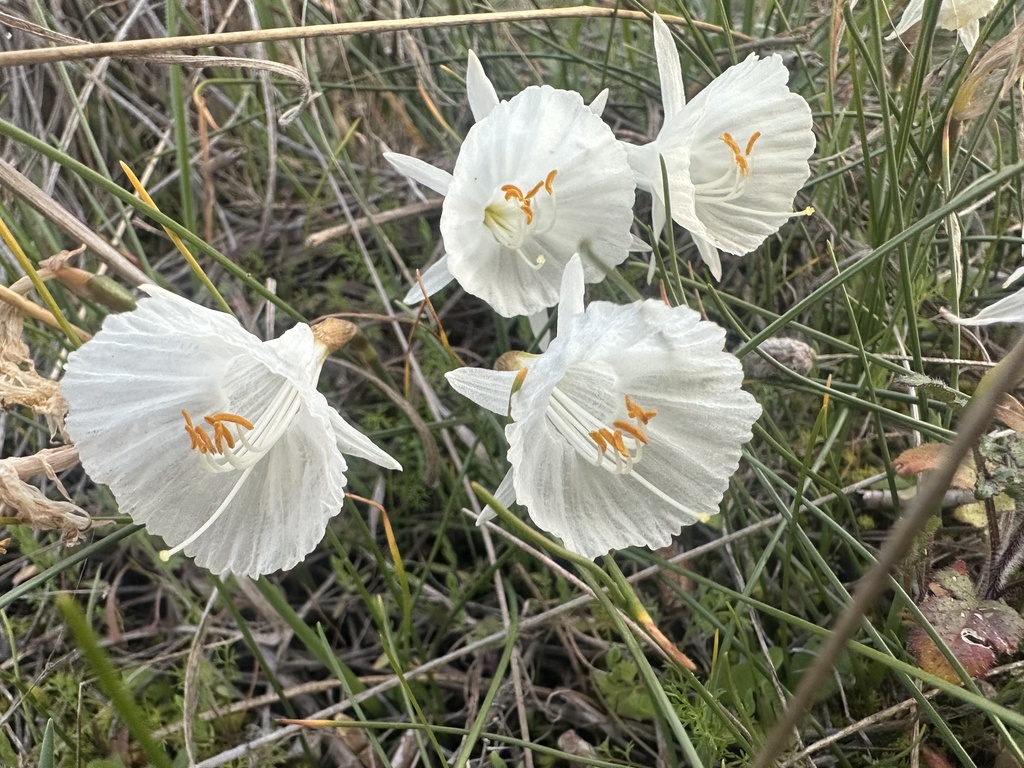
Narcissus cantabricus, commonly known as the Cantabrian Daffodil, is a small and charming daffodil species native to northern Spain. Its delicate white flowers, often solitary or in small clusters, feature a bell-shaped corona and reflexed petals, adding a touch of natural elegance to rockeries, borders, or wild gardens. It's perfect for creating early spring blooms that herald the arrival of the new season.
Native range
Iberian Peninsula (Spain and Portugal) and Northwest Africa
Care tips
It thrives in full sun or light partial shade and well-drained soils, preferably sandy or stony, with a neutral to slightly acidic pH. Watering should be moderate during growth and flowering, significantly reducing or stopping it once the leaves yellow, as excessive moisture during dormancy can rot the bulb. A common mistake is overwatering in summer when the bulb is dormant. It does not require frequent fertilization; a little compost when planting is usually sufficient.
How to save a dying Narcissus cantabricus
- Warning signs
- Yellowish or soft leaves, rot at the bulb base, no flowering.
- First aid
- Remove bulb, inspect roots, cut rotten parts, repot in dry, well-draining substrate.
- What kills it
- Overwatering, especially in summer. It needs a dry, warm dormancy period.
- Can it be saved?
- Yes, if rot is not too advanced. The key is to correct watering.