Fine-leaved grape hyacinth (Muscari tenuiflorum)
Care, watering, light and tips for Fine-leaved grape hyacinth on Floravia.
Quick facts
- Family: Asparagaceae
- Difficulty: Easy to care for
- Watering: every 7 days
- Light: Indirect light
- Temperature: 10–35 °C
- Toxicity: Toxic to pets
About Fine-leaved grape hyacinth
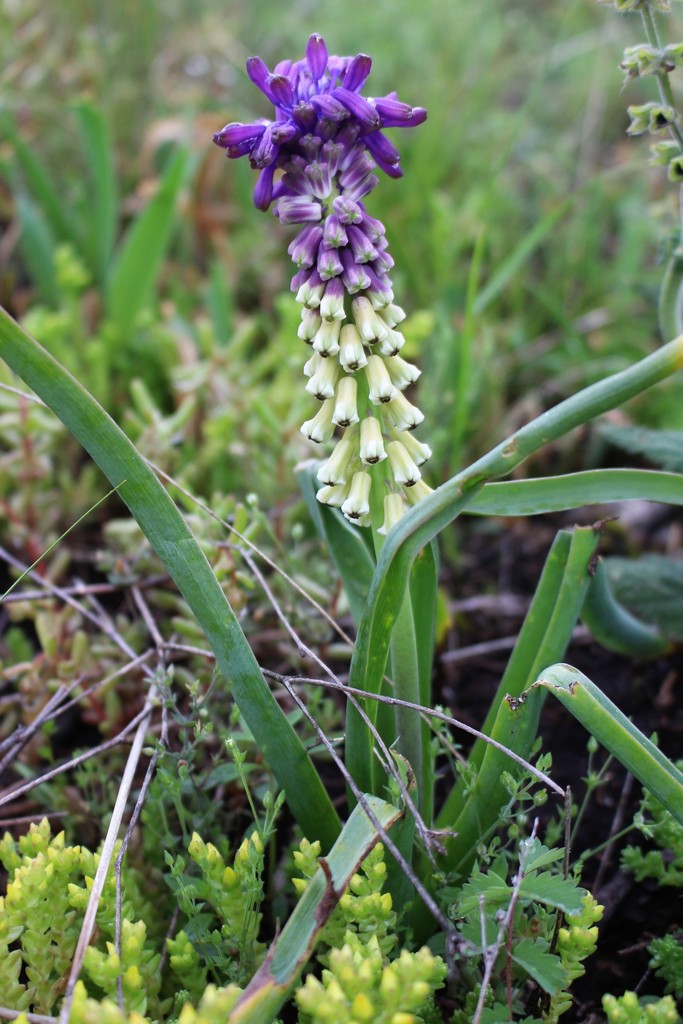
Muscari tenuiflorum, commonly known as Fine-flowered Grape Hyacinth, is a perennial bulbous plant that produces clusters of small, pale violet-blue tubular flowers, often with a delicate white fringe at the margins. Its slender, elegant flower spikes make it ideal for garden borders, rockeries, or for naturalizing in lawns, bringing a subtle charm in early spring.
Native range
Central and Eastern Europe, extending to the Caucasus
Care tips
It prefers a location in full sun to partial shade and well-drained, fertile, slightly sandy soil. Water moderately during flowering and reduce watering once the foliage begins to yellow. It's important to allow the leaves to wither naturally after flowering so the bulb can store energy for the following year. Avoid waterlogging, as it can lead to bulb rot.
How to save a dying Fine-leaved grape hyacinth
- Warning signs
- Yellowing or soft leaves, no flowering, soft or moldy bulb. Indicates overwatering or damaged bulb.
- First aid
- Remove bulb, inspect. Cut off soft/rotten parts. Let dry, replant in dry, well-draining soil.
- What kills it
- Overwatering is its worst enemy, especially during dormancy. Lack of a cold period for flowering.
- Can it be saved?
- Yes! Bulbs are resilient. With proper drainage and a cold cycle, it can recover and bloom.