Spineless butcher's broom (Ruscus hypoglossum)
Care, watering, light and tips for Spineless butcher's broom on Floravia.
Quick facts
- Family: Asparagaceae
- Difficulty: Easy to care for
- Watering: every 7 days
- Light: Indirect light
- Temperature: 10–35 °C
- Toxicity: Toxic to pets
About Spineless butcher's broom
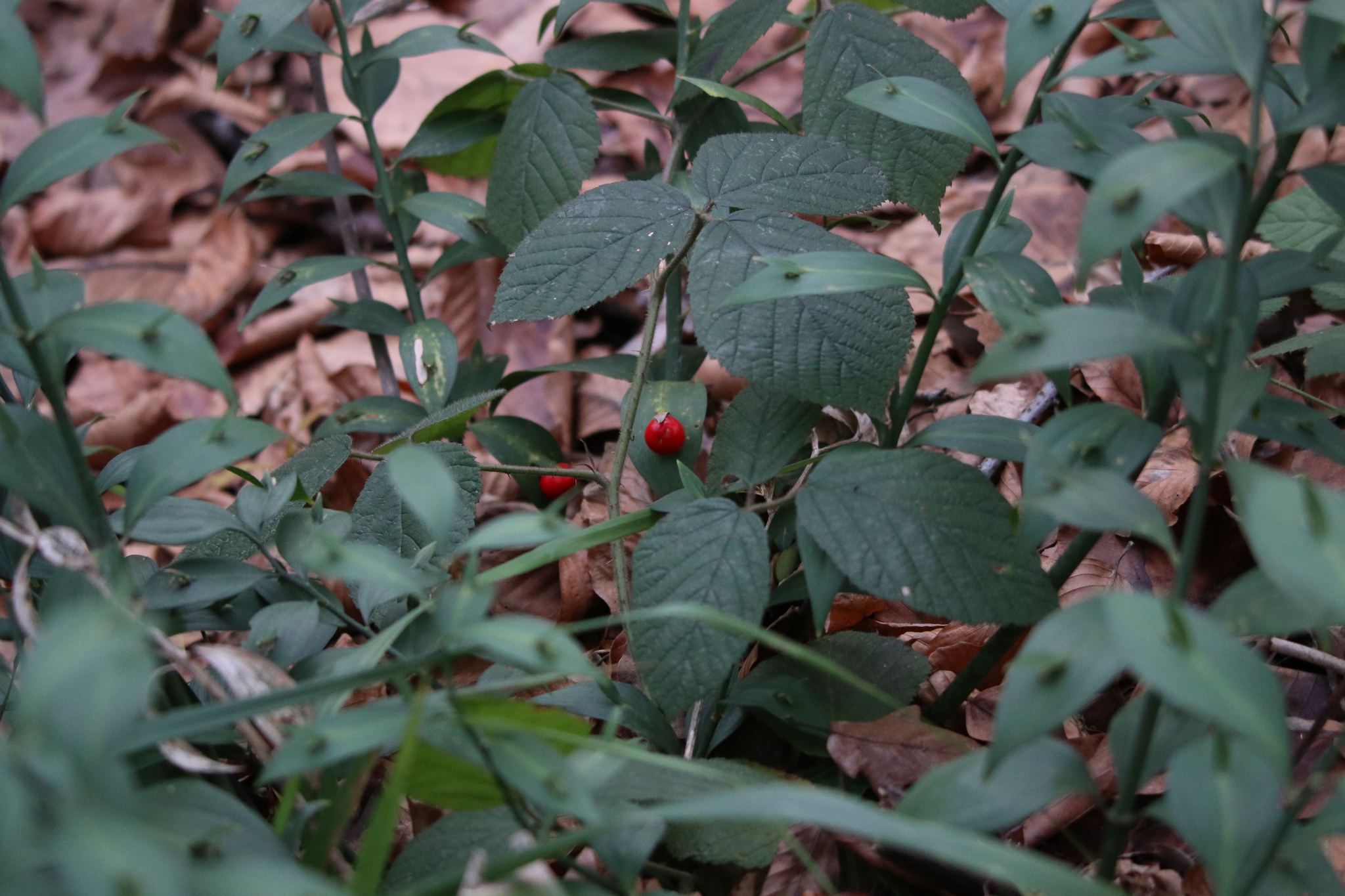
Ruscus hypoglossum, commonly known as Large Butcher's Broom, is a low-growing evergreen shrub prized for its glossy, dark green "leaves" (cladodes) and small red berries that appear in winter. Its dense and attractive habit makes it ideal for shady borders, underplantings, or as ground cover in woodland gardens, providing year-round texture and color. It is also an excellent choice for floral arrangements due to the durability of its stems.
Native range
Mediterranean region, from Southern Europe to North Africa and the Caucasus.
Care tips
It prefers partial to full shade, avoiding direct sun exposure which can scorch its cladodes. Watering should be moderate, allowing the substrate to dry out slightly between waterings, and it is quite drought-tolerant once established. It thrives in well-drained soils rich in organic matter, and a common mistake is planting it in overly compacted or waterlogged soils. It is a very hardy and low-maintenance plant.
How to save a dying Spineless butcher's broom
- Warning signs
- Yellowish or brown, wilting leaves, stunted growth.
- First aid
- Check watering, ensure well-draining soil, not waterlogged. Move to indirect light with good humidity.
- What kills it
- Overwatering (root rot) or lack of humidity and intense direct light.
- Can it be saved?
- Yes, if roots aren't completely rotted. Act quickly to adjust watering and conditions.