Red yucca (Hesperaloe parviflora)
Care, watering, light and tips for Red yucca on Floravia.
Quick facts
- Family: Asparagaceae
- Difficulty: Easy to care for
- Watering: every 14 days
- Light: Indirect light
- Temperature: 10–35 °C
- Toxicity: Toxic to pets
About Red yucca
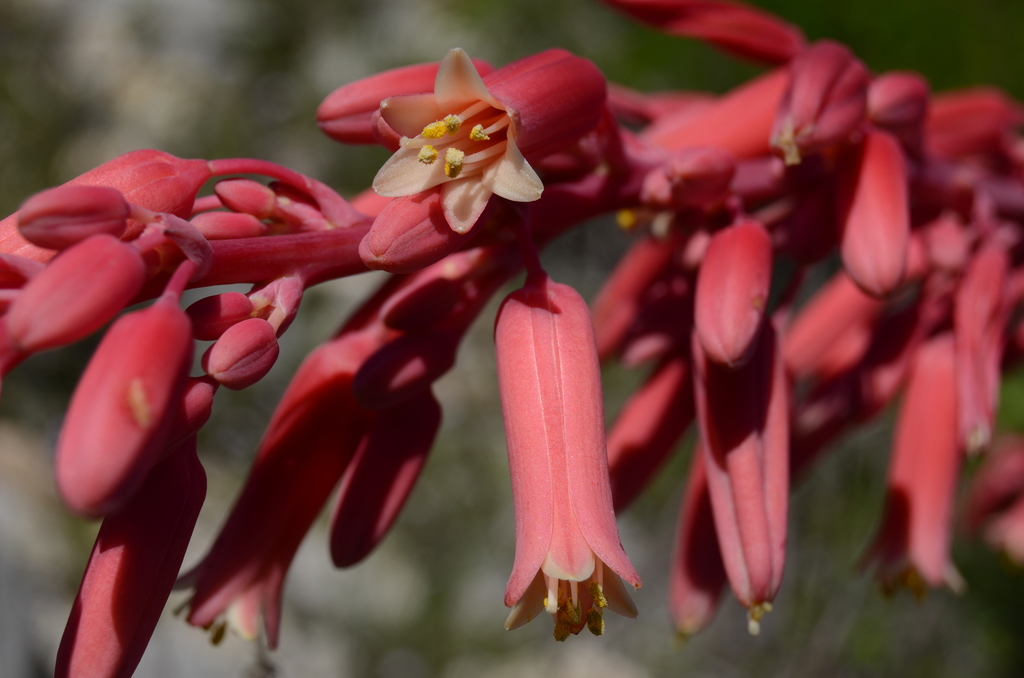
Hesperaloe parviflora, commonly known as red yucca or false yucca, is a perennial succulent native to Texas and northeastern Mexico. It is characterized by its long, narrow blue-green leaves forming a dense rosette, and by its striking coral to red flower spikes that can reach up to 1.5 meters (5 feet) in height. It is an excellent choice for low-maintenance gardens, xeriscaping, or as an accent in large pots in hot, dry climates.
Native range
Southwestern United States and northeastern Mexico
Care tips
This plant thrives in full sun, requiring at least 6-8 hours of direct sunlight per day for optimal flowering. It is extremely drought-tolerant; water only when the soil is completely dry, especially in hotter months, and reduce watering in winter. Use a well-draining substrate, preferably sandy or gravelly, to prevent waterlogging. A common mistake is overwatering, which can lead to root rot, its biggest weakness.
How to save a dying Red yucca
- Warning signs
- Soft, yellowing or browning leaves from the base, waterlogging. Dry or whitish tips due to dehydration.
- First aid
- If overwatered, remove from wet substrate, check roots, and repot in dry, well-draining soil. If dry, water deeply.
- What kills it
- Overwatering is its main enemy, rotting its roots. Lack of light also weakens it.
- Can it be saved?
- Yes, if rot is not too advanced and healthy roots remain. It's drought-tolerant, so underwatering is easier to reverse.