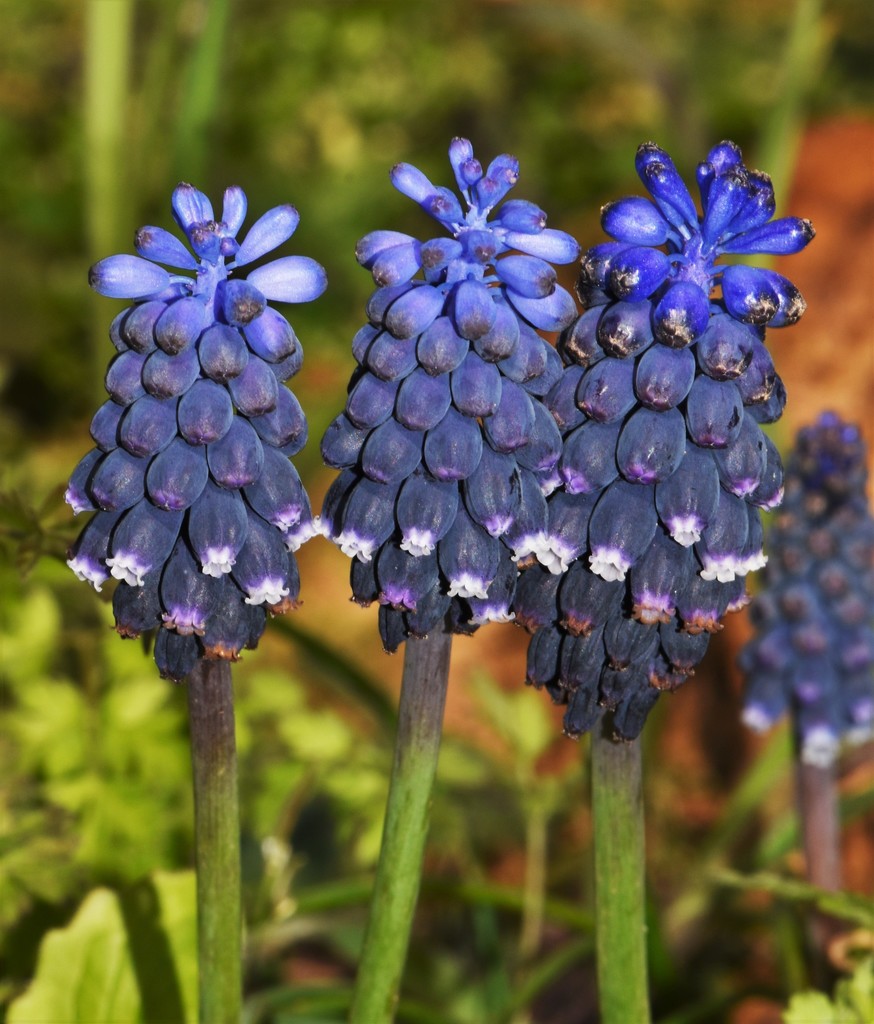
Grape hyacinth (Muscari neglectum)
Care, watering, light and tips for Grape hyacinth on Floravia.
Quick facts
- Family: Asparagaceae
- Difficulty: Easy to care for
- Watering: every 7 days
- Light: Indirect light
- Temperature: 10–35 °C
- Toxicity: Toxic to pets
About Grape hyacinth
Muscari neglectum, also known as starch grape hyacinth or common grape hyacinth, is a small perennial bulbous plant that produces dense clusters of deep blue-violet flowers, each with a distinct white rim, resembling miniature bunches of grapes. It is ideal for rock gardens, path borders, or for naturalizing in lawns and under deciduous trees, bringing a vibrant splash of color in early spring. Its compact size and early bloom make it perfect for pots and containers, brightening any corner.
Native range
Mediterranean region, from Southern Europe to North Africa and Southwest Asia
Care tips
It requires full sun to light partial shade for optimal flowering. Watering should be moderate during growth and flowering, keeping the soil slightly moist, and drastically reduced once the leaves begin to yellow after blooming. It prefers well-drained soil, rich in organic matter, with a neutral to slightly alkaline pH; good drainage is crucial to prevent bulb rot. A common mistake to avoid is cutting the foliage after flowering; allow it to wither naturally so the bulb can store energy for the following year.
How to save a dying Grape hyacinth
- Warning signs
- Yellow or soft leaves (overwatering), dry tips (underwatering), no blooms.
- First aid
- Check drainage and soil moisture. If soft, repot in dry soil. If dry, water moderately.
- What kills it
- Overwatering is its worst enemy, quickly rotting the bulb. Also, insufficient light.
- Can it be saved?
- Yes, if the bulb is not completely rotted. Act fast when you detect watering issues.