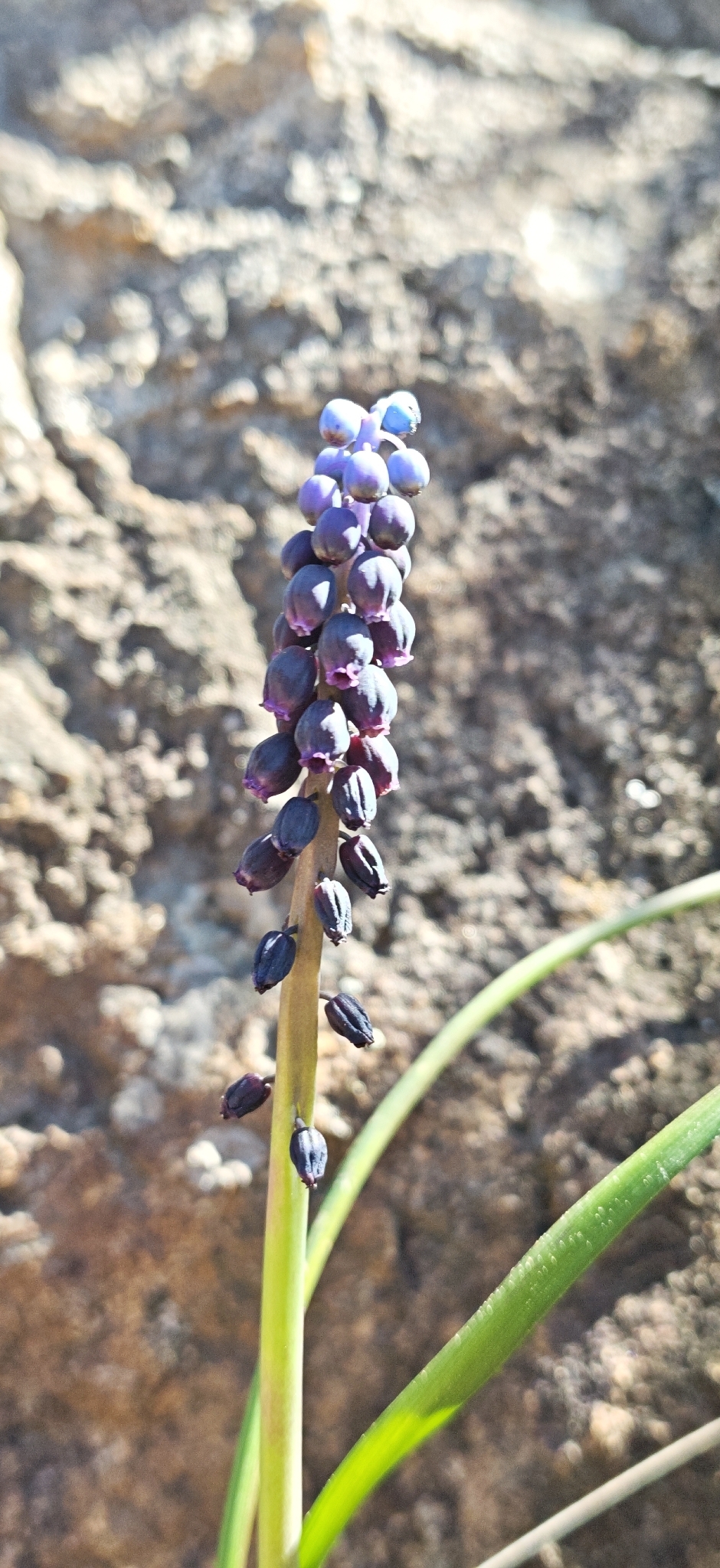
Grape hyacinth (Muscari atlanticum)
Care, watering, light and tips for Grape hyacinth on Floravia.
Quick facts
- Family: Asparagaceae
- Difficulty: Easy to care for
- Watering: every 7 days
- Light: Indirect light
- Temperature: 10–35 °C
- Toxicity: Toxic to pets
About Grape hyacinth
Muscari atlanticum, commonly known as Atlantic Grape Hyacinth, is a charming bulbous plant that produces dense spikes of small, urn-shaped flowers, typically a vibrant blue-violet, in early spring. Its compact blooms and narrow, grass-like foliage make it ideal for garden borders, rockeries, or for naturalizing in lawns and under deciduous trees, bringing an intense and early splash of color.
Native range
Mediterranean region, from Southern Europe to North Africa and Southwest Asia.
Care tips
It requires full sun to partial shade and prefers well-drained soil rich in organic matter. Watering should be moderate during growth and flowering, drastically reducing it once the foliage begins to yellow and the plant enters summer dormancy. Avoid waterlogging, as this can lead to bulb rot; ensuring good drainage is crucial for its survival.
How to save a dying Grape hyacinth
- Warning signs
- Yellowing or wilting leaves, weak or no flowering, soft or moldy bulbs.
- First aid
- Check drainage and soil moisture. Ensure good ventilation and bright indirect light.
- What kills it
- Overwatering, which rots the bulbs. Low light or heavy soil are also harmful.
- Can it be saved?
- Yes, if bulbs aren't completely rotted. Remove damaged parts and repot in fresh soil.