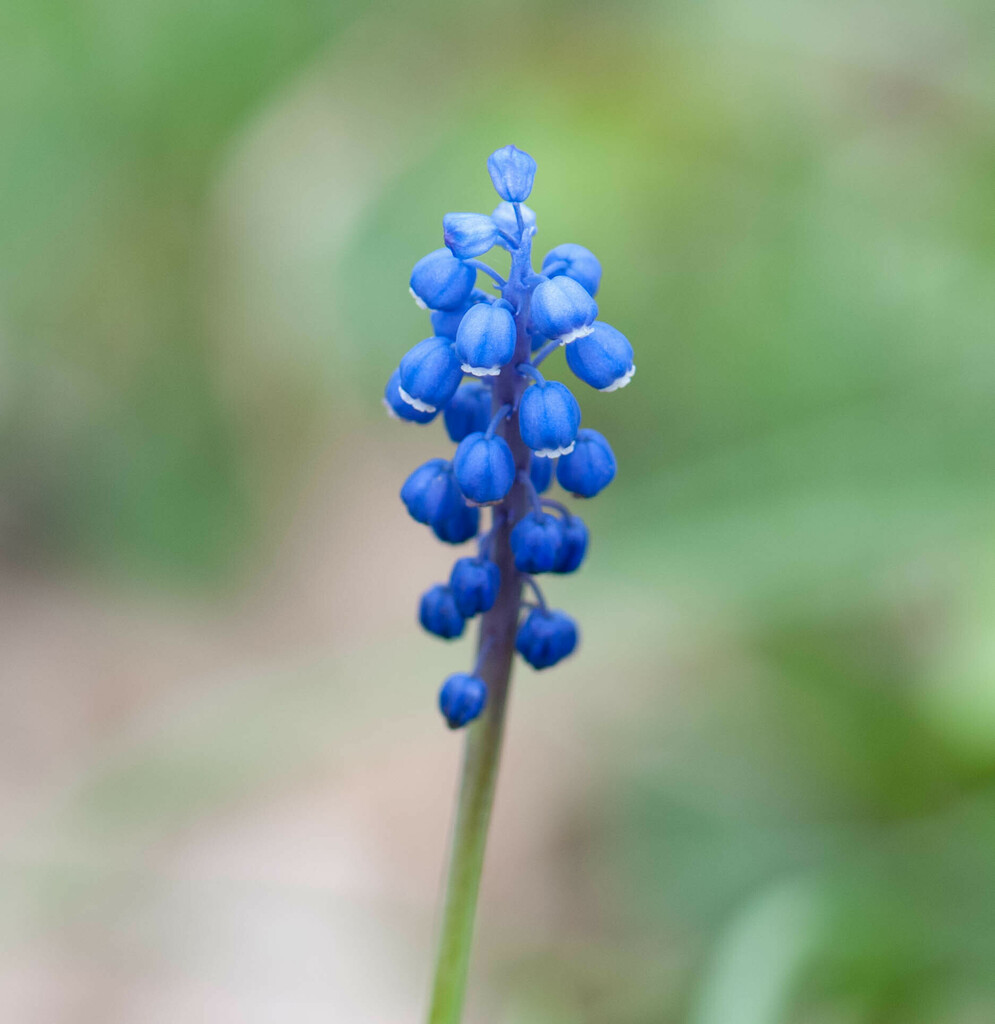
Grape hyacinth (Muscari botryoides)
Care, watering, light and tips for Grape hyacinth on Floravia.
Quick facts
- Family: Asparagaceae
- Difficulty: Easy to care for
- Watering: every 7 days
- Light: Indirect light
- Temperature: 10–35 °C
- Toxicity: Toxic to pets
About Grape hyacinth
Muscari botryoides, commonly known as Grape Hyacinth, is a small perennial bulbous plant that produces dense clusters of urn-shaped blue or violet flowers, resembling tiny bunches of grapes. It's a delightful addition to garden borders, rockeries, or pots, blooming profusely in early spring. Its compact size and early bloom make it ideal for adding color before other plants begin to develop.
Native range
Central and Southern Europe, Turkey, and the Caucasus
Care tips
It prefers full sun to partial shade and well-drained soil, though it is quite tolerant of different soil types. Water moderately during the active growing period; once the leaves start to yellow, reduce watering to almost none. Avoid overwatering, especially in winter, as the bulbs can rot. Do not remove the leaves before they have fully withered, as this weakens the bulb for the following year's bloom.
How to save a dying Grape hyacinth
- Warning signs
- Yellowish or soft leaves, drooping stems, lack of flowering or premature wilting.
- First aid
- Check drainage. If waterlogged, remove from pot, discard wet soil, and repot in dry, light substrate. If dry, water moderately.
- What kills it
- Overwatering is the main killer; its bulbs rot easily. Also, poor drainage.
- Can it be saved?
- Yes, often. If the bulb is not completely rotted, it can recover with proper care and patience.