Bailey's yucca (Yucca baileyi)
Care, watering, light and tips for Bailey's yucca on Floravia.
Quick facts
- Family: Asparagaceae
- Difficulty: Easy to care for
- Watering: every 21 days
- Light: Indirect light
- Temperature: 10–35 °C
- Toxicity: Toxic to pets
About Bailey's yucca
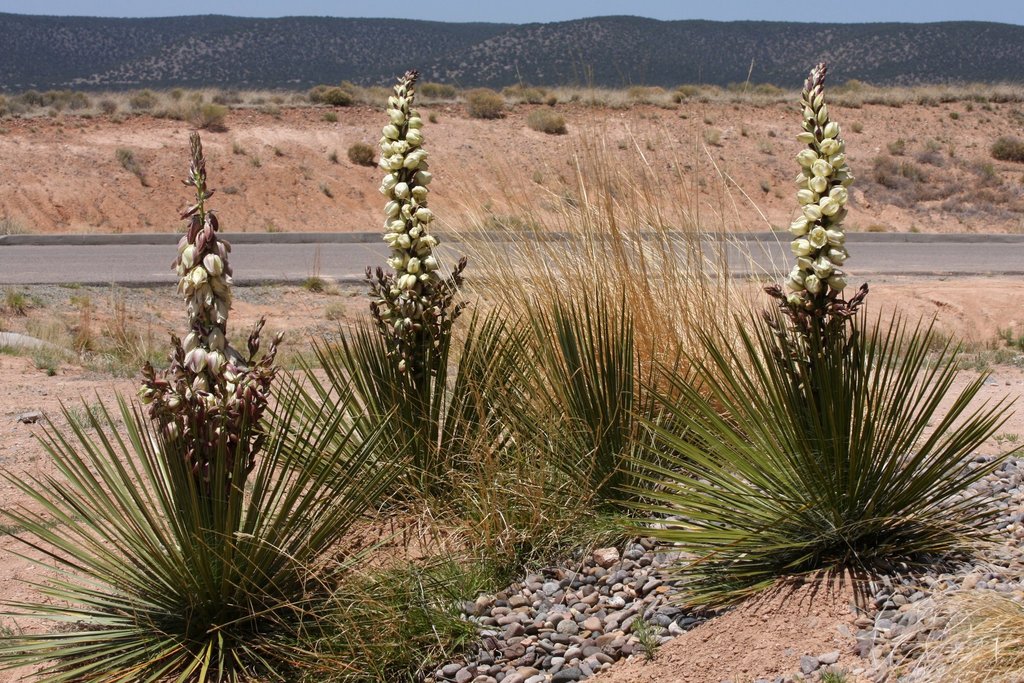
Yucca baileyi, also known as Bailey's Yucca, is a medium-sized yucca species native to the southwestern United States. It's characterized by its dense rosettes of slender, stiff, blue-green leaves, forming a compact sphere, and is an excellent choice for desert gardens, rockeries, or as a focal point in arid landscapes. Its spring bloom produces a tall stalk with white or cream flowers, adding a distinctive ornamental touch.
Native range
Southwestern United States (Arizona, Arizona, Colorado, New Mexico, Utah)
Care tips
This yucca thrives in full sun, requiring at least 6-8 hours of direct sunlight daily for optimal growth. Watering should be minimal and spaced out; it's crucial to allow the soil to dry out completely between waterings, especially in winter, to prevent root rot. Use a very well-draining substrate, ideally a cactus and succulent mix or sandy garden soil. A common mistake is overwatering, which is the leading cause of failure for this drought-tolerant species.
How to save a dying Bailey's yucca
- Warning signs
- Soft, yellowing or browning leaves from the base; soft or blackened stem. This indicates rot from overwatering.
- First aid
- Remove plant, check roots. Cut off soft/rotten parts with clean knife. Air dry 24-48h. Replant in dry, well-draining soil.
- What kills it
- Overwatering is the main killer. Prefers extreme dryness. Also lack of direct light.
- Can it be saved?
- Yes, if rot hasn't reached the stem's core. Act fast. Take healthy cuttings if the base is too affected.