Sea squill (Drimia maritima)
Care, watering, light and tips for Sea squill on Floravia.
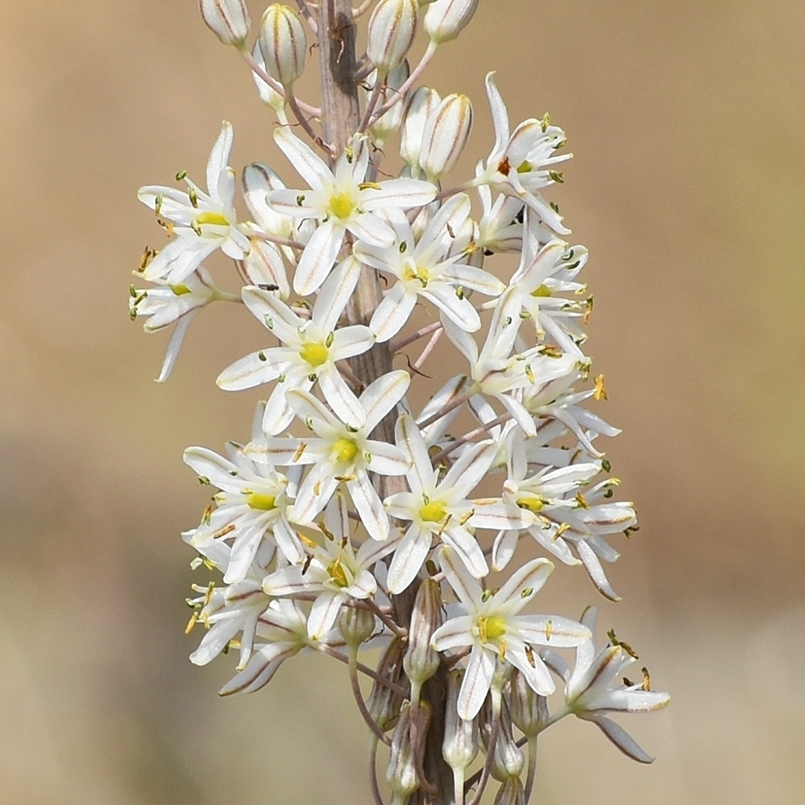
Quick facts
- Family: Asparagaceae
- Difficulty: Easy to care for
- Watering: every 14 days
- Light: Indirect light
- Temperature: 10–35 °C
- Toxicity: Toxic to pets
About Sea squill
Drimia maritima, also known as Sea Squill or Sea Onion, is a perennial bulbous plant from the Asparagaceae family, native to Mediterranean coasts. It is characterized by its large, partially exposed bulb and tall, spiky inflorescences with numerous white or greenish flowers that appear in late summer or early autumn, often before its large, strap-like leaves. It is ideal for rock gardens, xeriscaping, or as a focal point in large pots, adding a wild and rustic touch.
Native range
Mediterranean region, including Southern Europe, North Africa, and the Middle East.
Care tips
It requires full sun and prefers well-drained soils, even poor or sandy ones, being very drought-tolerant once established. Watering should be minimal, especially during its summer dormancy period, and only sporadic during active growth if the climate is very dry. Ensure the bulb is partially buried, leaving the top exposed, and avoid excess moisture in the substrate to prevent bulb rot, its main enemy.
How to save a dying Sea squill
- Warning signs
- Soft, yellowing, drooping leaves; bulb feels mushy or soft. Also if the bulb shrinks and wrinkles.
- First aid
- If soft, remove bulb, clean, check roots, replant in dry substrate. If wrinkled, water lightly.
- What kills it
- Overwatering is its demise. Also total lack of drainage or heavy soil retaining moisture.
- Can it be saved?
- Yes! It's very resilient. A damaged bulb can recover if you act quickly and correct conditions.