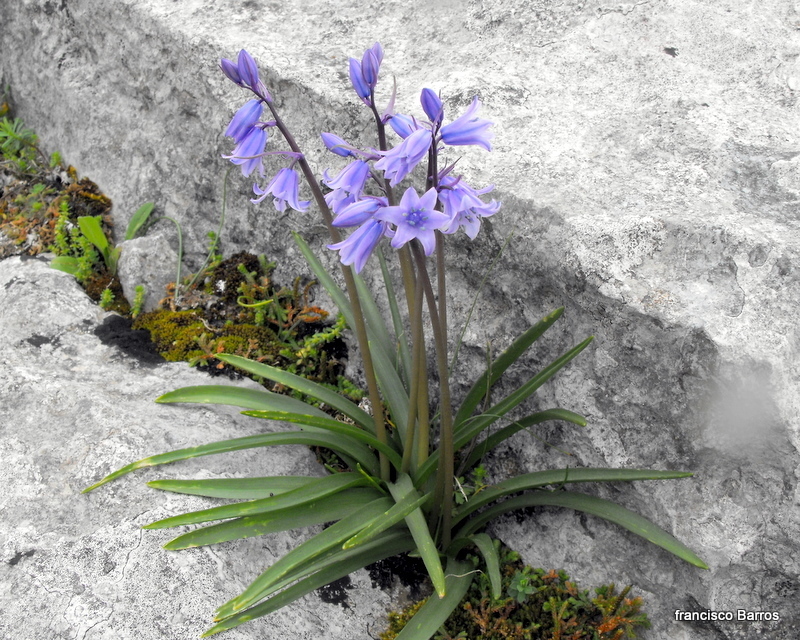
Spanish bluebell (Hyacinthoides hispanica)
Care, watering, light and tips for Spanish bluebell on Floravia.
Quick facts
- Family: Asparagaceae
- Difficulty: Easy to care for
- Watering: every 7 days
- Light: Indirect light
- Temperature: 10–35 °C
- Toxicity: Toxic to pets
About Spanish bluebell
Hyacinthoides hispanica, commonly known as Spanish Bluebell, is a perennial bulbous plant from the Asparagaceae family, native to the Iberian Peninsula. It produces erect flower stalks up to 40 cm tall, adorned with pendulous bell-shaped flowers in blue, pink, or white. It is ideal for naturalizing in woodland gardens, under deciduous trees, or in flower beds where a spring floral carpet effect is desired.
Native range
Iberian Peninsula and Northwest Africa
Care tips
It prefers locations with partial shade or filtered light, especially in warmer climates, though it tolerates full sun in cooler regions. The soil should be well-drained, rich in organic matter, and kept moist during the growing season (spring), reducing watering once the foliage begins to yellow. A common mistake is digging up the bulbs annually; they are best left in the ground to naturalize and spread on their own. Avoid waterlogging, as it can lead to bulb rot.
How to save a dying Spanish bluebell
- Warning signs
- Yellowish or soft leaves, drooping stems. If soil is waterlogged, it might be bulb rot.
- First aid
- Remove bulb from soil, inspect. Cut off soft or rotten parts with a clean tool. Air dry for a few hours.
- What kills it
- Overwatering, especially after flowering when the bulb goes dormant. It cannot tolerate waterlogging.
- Can it be saved?
- Yes, if rot hasn't affected the entire bulb. Replant in well-drained soil and water sparingly.