Vanilla inodora
Care, watering, light and tips for Vanilla inodora on Floravia.
Quick facts
- Family: Orchidaceae
- Difficulty: Demanding
- Watering: every 7 days
- Light: Indirect light
- Temperature: 15–30 °C
About Vanilla inodora
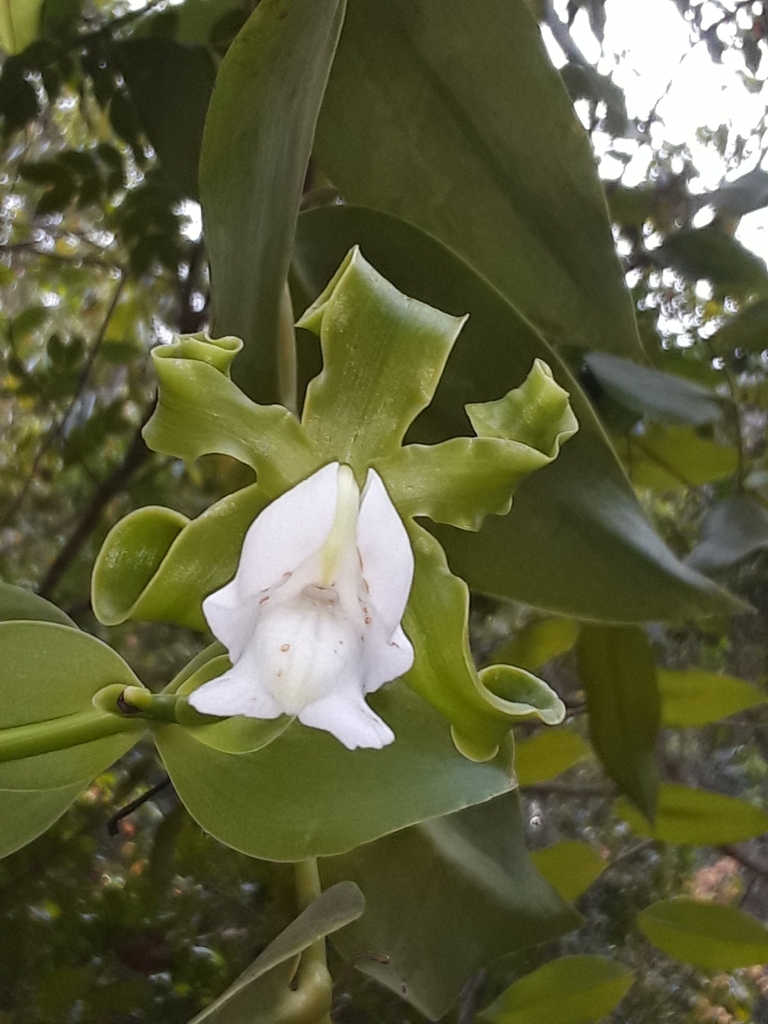
Vanilla inodora, often referred to as wild or non-aromatic vanilla, is a climbing orchid that produces long, fleshy stems with thick, elliptical leaves. Unlike its cousin Vanilla planifolia, its fruits do not possess the characteristic vanilla aroma. It is an ideal plant for large terrariums or greenhouses where it can climb and display its lush foliage.
Native range
Mexico, Central America, and the Caribbean
Care tips
It requires bright, indirect light, avoiding direct sun exposure that can scorch its leaves. Watering should be frequent, keeping the substrate consistently moist but not waterlogged, especially during its active growth. Use a well-draining and aerated substrate, such as an epiphytic orchid mix with pine bark and sphagnum moss. A common mistake is the lack of support for climbing, which is essential for its development and flowering.
How to save a dying Vanilla inodora
- Warning signs
- Yellowish or brown, soft leaves; dry or blackened stems; lack of growth or rotten roots.
- First aid
- Inspect roots, prune damaged parts. Repot into airy substrate (pine bark, sphagnum moss). Ensure high humidity, indirect light.
- What kills it
- Overwatering causing root rot; low ambient humidity; compacted, poorly draining substrate.
- Can it be saved?
- Yes, if rot hasn't affected the entire stem. Recovery is slow, but possible with proper care.