Lesser butterfly-orchid (Platanthera bifolia)
Care, watering, light and tips for Lesser butterfly-orchid on Floravia.
Quick facts
- Family: Orchidaceae
- Difficulty: Demanding
- Watering: every 7 days
- Light: Indirect light
- Temperature: 15–30 °C
About Lesser butterfly-orchid
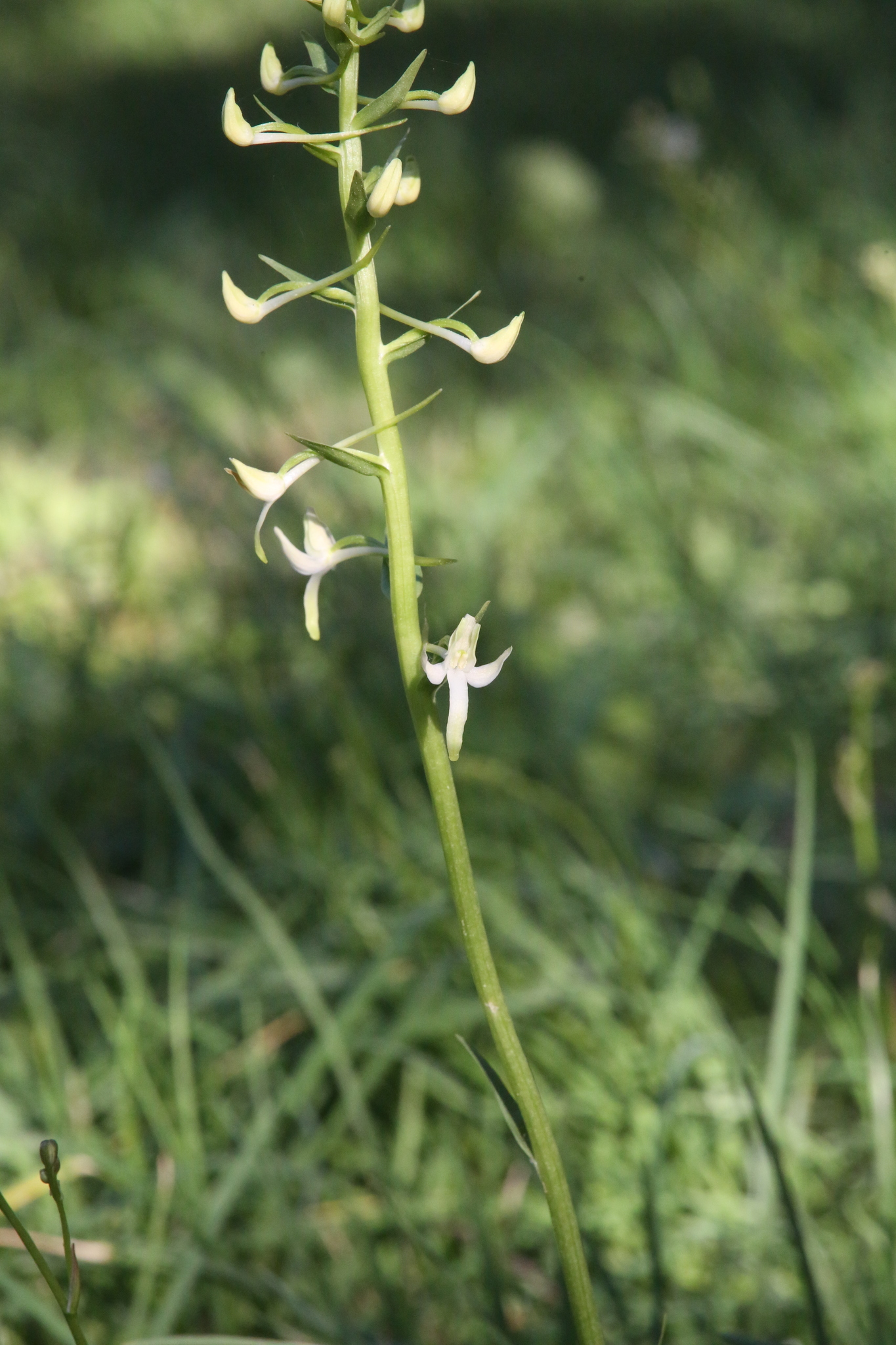
Platanthera bifolia, commonly known as the Lesser Butterfly-orchid, is a terrestrial orchid native to Europe, featuring two distinct basal leaves and a floral spike of delicate white or greenish flowers. Its blooms, typically appearing in summer, release a sweet fragrance at night, attracting nocturnal pollinators. It's a charming addition to wild-style gardens or woodland edges where a natural and understated touch is desired.
Native range
Europe and temperate Asia
Care tips
It requires a location with partial shade or light shade, avoiding direct midday sun. The substrate should be moist but well-drained, preferably with a slightly acidic to neutral pH, rich in organic matter, and similar to a woodland environment. Maintain consistent moisture during the growing season, but drastically reduce watering once the plant enters dormancy in autumn. A common mistake is attempting to grow it in a pot like a tropical indoor orchid; it is a terrestrial species that prefers its natural habitat.
How to save a dying Lesser butterfly-orchid
- Warning signs
- Soft, yellowing or spotted leaves, limp stems, no flowering.
- First aid
- Check substrate; if waterlogged, remove plant, clean rotten roots, repot in fresh, airy substrate. If dry, water gently.
- What kills it
- Overwatering rotting tubers, or prolonged extreme dryness dehydrating them. Also intense direct sunlight.
- Can it be saved?
- Yes, if tubers are not completely rotten or dehydrated. Act quickly.