Blue-eyed grass (Sisyrinchium angustifolium)
Care, watering, light and tips for Blue-eyed grass on Floravia.
Quick facts
- Family: Iridaceae
- Difficulty: Easy to care for
- Watering: every 3 days
- Light: Partial shade
- Temperature: 10–30 °C
- Toxicity: Toxic to pets
About Blue-eyed grass
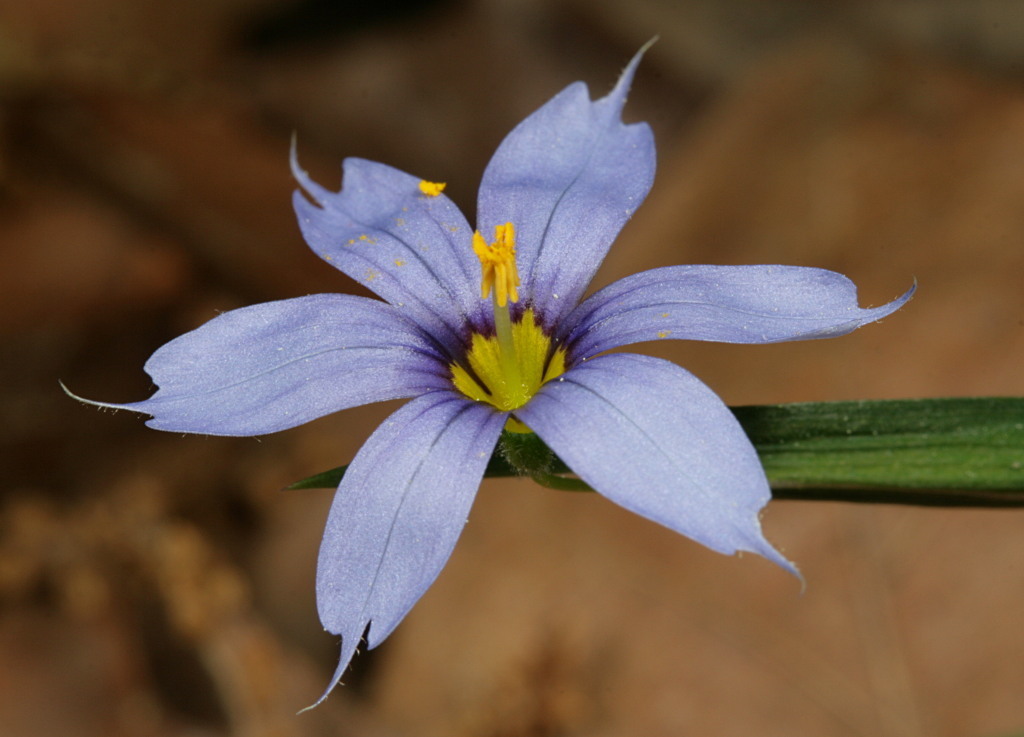
Sisyrinchium angustifolium, commonly known as 'stout blue-eyed grass', is a small herbaceous perennial from the Iridaceae family, prized for its delicate blue or violet flowers with a yellow center. It grows in compact clumps of grass-like leaves, reaching about 30 cm in height. It is ideal for rock gardens, path borders, or as a filler plant in naturalistic gardens, providing a touch of vibrant color.
Native range
North America (eastern and central)
Care tips
This plant prefers full sun to light partial shade and well-drained soils, though it tolerates a range of conditions. Watering should be moderate; it's important to let the substrate dry out slightly between waterings to avoid waterlogging, to which it is sensitive. A common mistake is planting it in heavy, poorly draining soils, which can lead to root rot. It does not require much fertilization and is quite hardy once established.
How to save a dying Blue-eyed grass
- Warning signs
- Yellowing or browning leaves from the tip, stunted growth, no flowering, general wilting. 🌿
- First aid
- Check drainage and soil moisture. If waterlogged, repot into well-drained soil. If dry, water deeply.
- What kills it
- Excessive moisture or heavy soils causing root rot; also prolonged extreme dryness.
- Can it be saved?
- Yes, if you act quickly. It's quite hardy but needs good water balance.