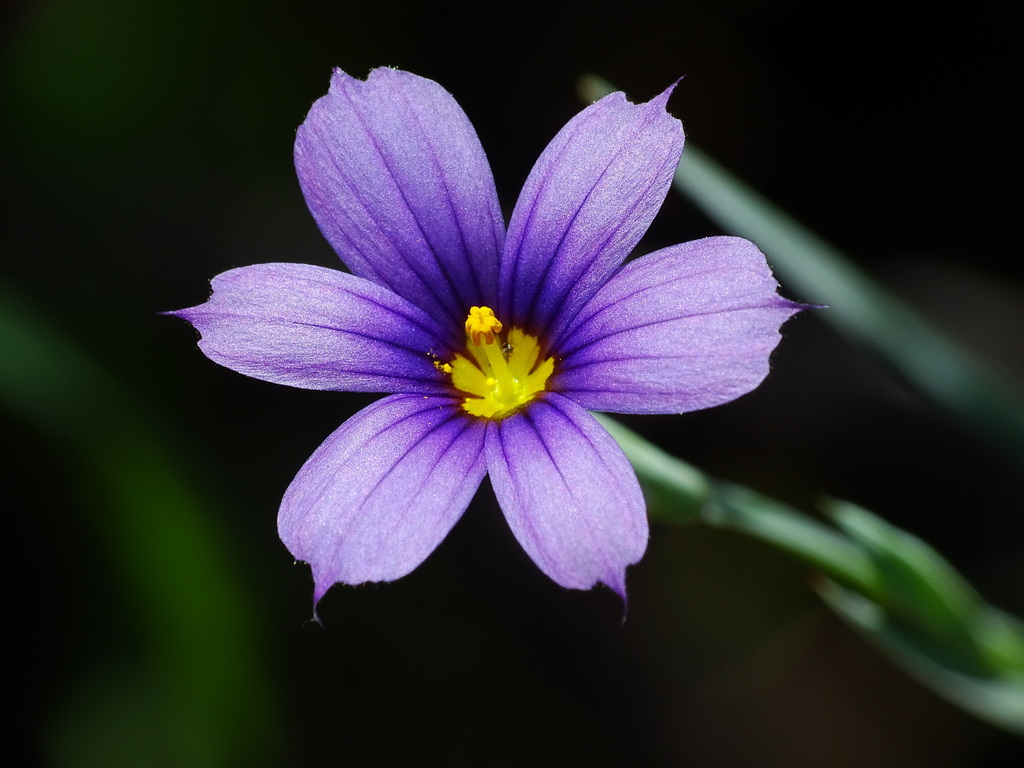
Western blue-eyed grass (Sisyrinchium bellum)
Care, watering, light and tips for Western blue-eyed grass on Floravia.
Quick facts
- Family: Iridaceae
- Difficulty: Easy to care for
- Watering: every 7 days
- Light: Partial shade
- Temperature: 10–30 °C
- Toxicity: Toxic to pets
About Western blue-eyed grass
Sisyrinchium bellum, also known as 'tukupar ahen' or blue-eyed grass, is a charming perennial native to California. It produces small, blue-violet flowers that resemble miniature irises, creating a vibrant floral carpet effect. It's ideal for rock gardens, path borders, or as ground cover in sunny areas.
Native range
Western North America, from British Columbia to California
Care tips
This plant prefers full sun to partial shade and well-drained, even poor, soils. It tolerates drought once established but appreciates occasional watering during prolonged dry spells. Avoid waterlogging, as it can lead to root rot. It doesn't require much fertilization; over-fertilizing can promote foliage at the expense of flowers.
How to save a dying Western blue-eyed grass
- Warning signs
- Yellowing or browning, wilted leaves, limp and lifeless appearance. May have no blooms or deformed flowers.
- First aid
- Check drainage and soil moisture. Remove dry leaves. If potted, consider repotting into a container with better drainage. Protect from intense direct sun.
- What kills it
- Overwatering leading to root rot, or heavy, poorly draining soil. Also prolonged extreme dryness or strong afternoon sun without protection.
- Can it be saved?
- Yes! It's a resilient plant. Act quickly to correct watering and exposure. Provide partial shade in hot climates and well-drained soil.