Blue-eyed grass (Sisyrinchium bermudiana)
Care, watering, light and tips for Blue-eyed grass on Floravia.
Quick facts
- Family: Iridaceae
- Difficulty: Easy to care for
- Watering: every 3 days
- Light: Partial shade
- Temperature: 10–30 °C
- Toxicity: Toxic to pets
About Blue-eyed grass
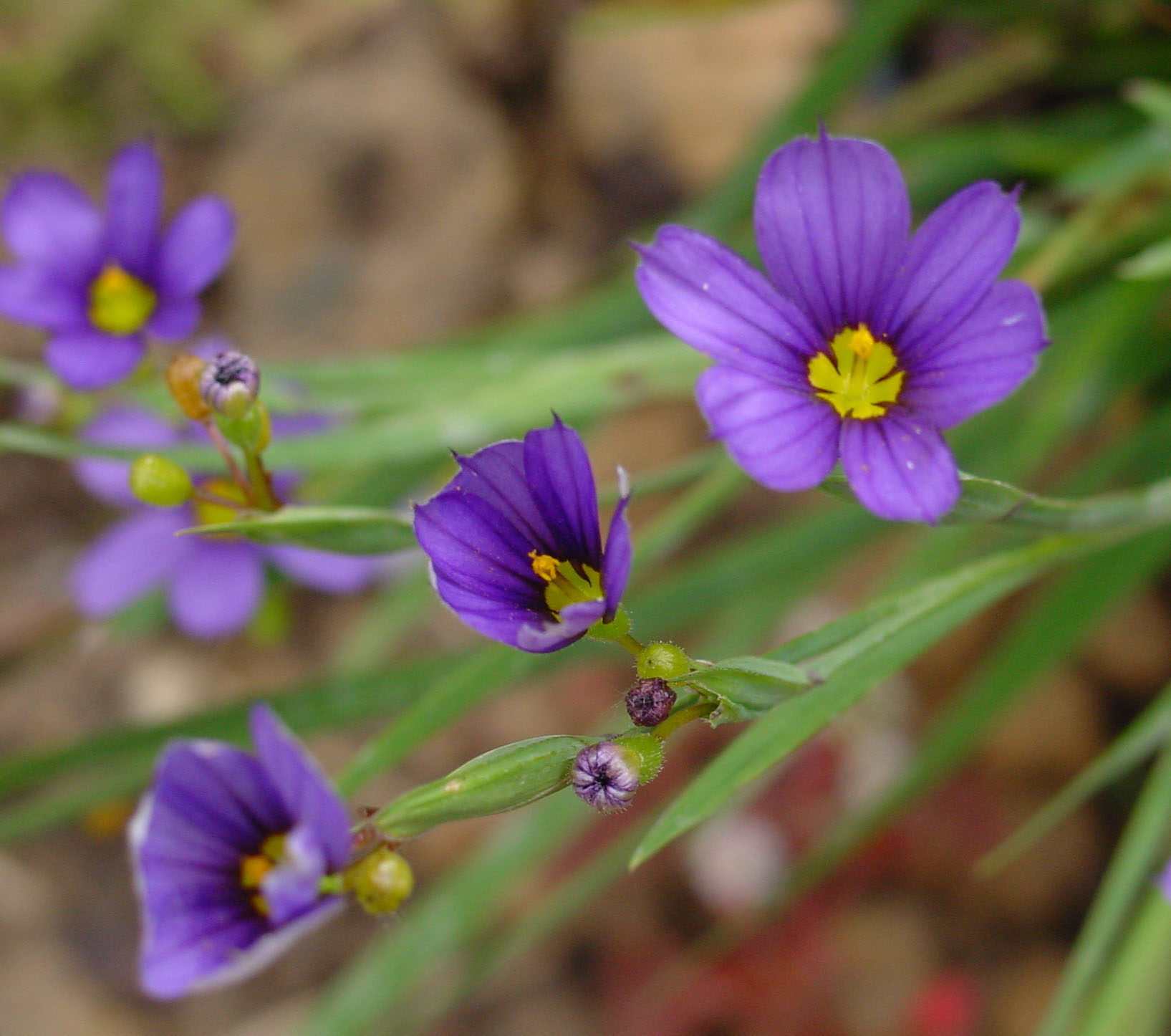
Sisyrinchium bermudiana, commonly known as Blue-eyed Grass, is a small herbaceous perennial plant belonging to the Iridaceae family, native to Bermuda. It is characterized by its delicate blue or purple flowers with a yellow center, blooming in spring and early summer, emerging from slender, sword-shaped leaves. It is ideal for rock gardens, path borders, naturalistic gardens, or as an accent plant in pots, adding a subtle and elegant touch of color.
Native range
Bermuda and eastern North America
Care tips
It prefers full sun to light partial shade and well-drained, moist but not waterlogged soil; it tolerates a variety of soils as long as they are not excessively heavy. Maintain regular watering during the growing season, especially during dry spells, and reduce in winter. It does not require much fertilization, but a light application of compost in spring can be beneficial. A common mistake is planting it in very heavy, poorly drained clay soils, which can lead to root rot.
How to save a dying Blue-eyed grass
- Warning signs
- Yellowish or brown, wilting, limp leaves.
- First aid
- Check drainage and soil moisture. Ensure full sun or partial shade.
- What kills it
- Overwatering causing root rot or extreme, prolonged drought.
- Can it be saved?
- Yes, if roots aren't completely rotted and cause is corrected.