Eastern blue-eyed grass (Sisyrinchium atlanticum)
Care, watering, light and tips for Eastern blue-eyed grass on Floravia.
Quick facts
- Family: Iridaceae
- Difficulty: Easy to care for
- Watering: every 3 days
- Light: Partial shade
- Temperature: 10–30 °C
- Toxicity: Toxic to pets
About Eastern blue-eyed grass
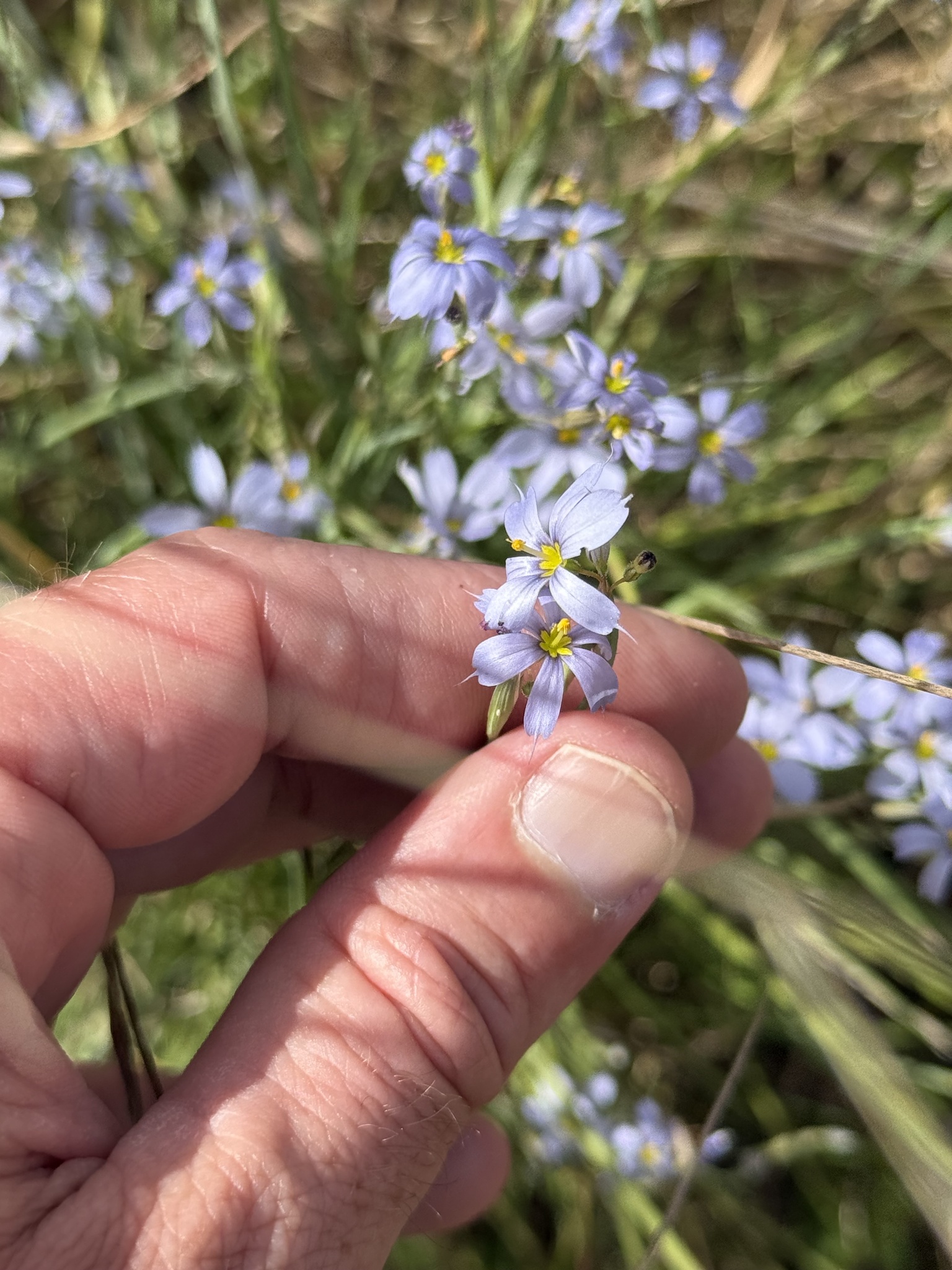
Sisyrinchium atlanticum, commonly known as Eastern Blue-eyed Grass, is a small, herbaceous perennial plant belonging to the iris family. It produces delicate blue-violet flowers with yellow centers that open in the morning and close in the afternoon. It is ideal for rock gardens, path edges, or as part of a wildflower meadow, adding a subtle and natural touch of color.
Native range
Eastern North America
Care tips
This plant thrives in full sun to partial shade and prefers moist but well-drained soils, tolerating a variety of soil types. Keep the soil consistently moist, especially during dry spells, but avoid waterlogging. A common mistake is planting it in excessively dry soils or low light conditions, which can significantly reduce its flowering. It does not require heavy fertilization.
How to save a dying Eastern blue-eyed grass
- Warning signs
- Yellow or brown, wilted, soft leaves; no blooms or fallen flowers.
- First aid
- Repot into well-draining pot, water moderately only when substrate is dry. Place in partial shade.
- What kills it
- Overwatering and waterlogged soil. Also intense direct sun burns its leaves.
- Can it be saved?
- Yes, if you act quickly. Remove damaged leaves and improve drainage.