Snake's head iris (Iris tuberosa)
Care, watering, light and tips for Snake's head iris on Floravia.
Quick facts
- Family: Iridaceae
- Difficulty: Moderate care
- Watering: every 7 days
- Light: Partial shade
- Temperature: 10–30 °C
- Toxicity: Toxic to pets
About Snake's head iris
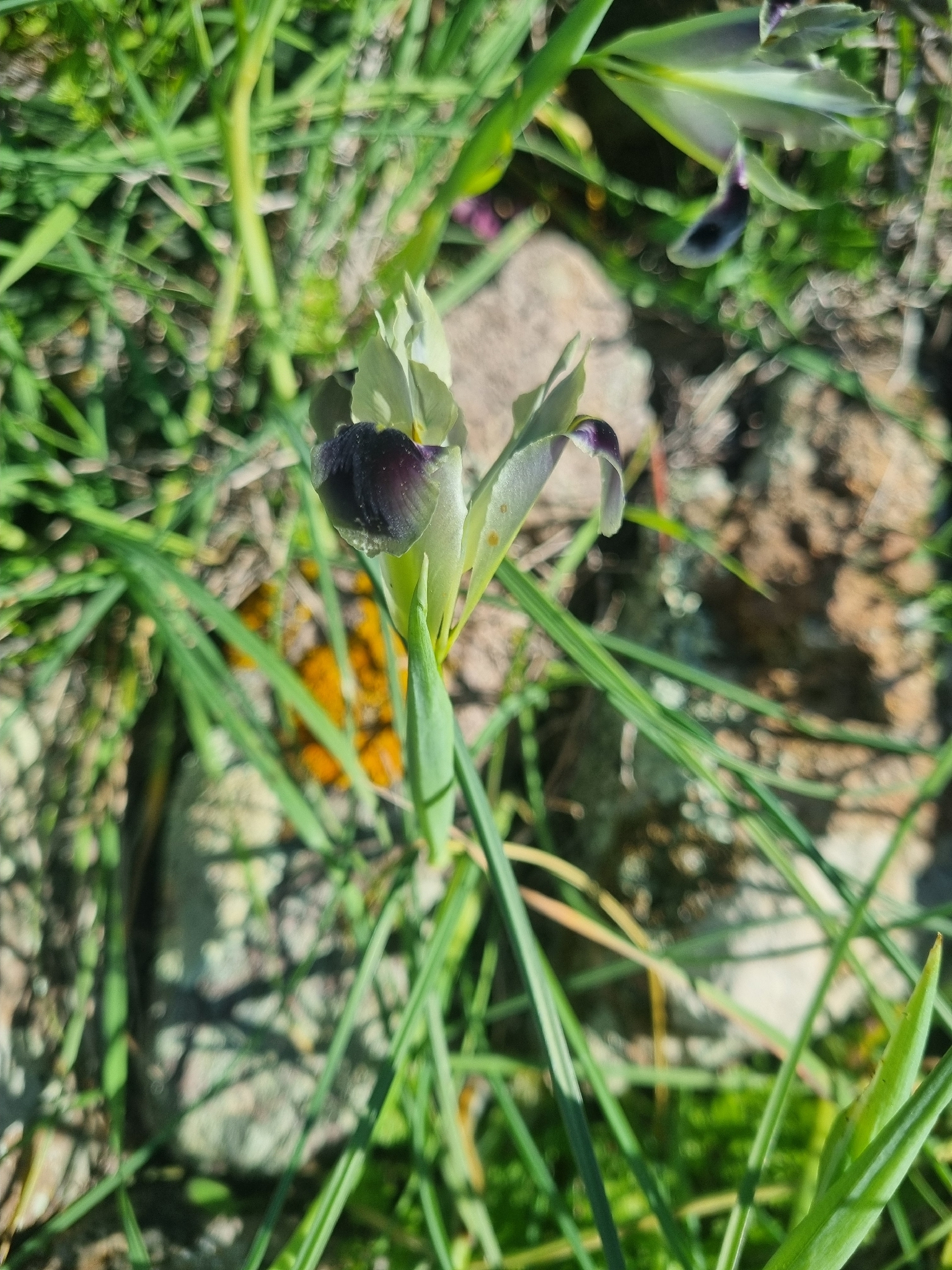
Iris tuberosa, commonly known as the "Snake's-head Iris", is a perennial bulbous plant belonging to the Iridaceae family, native to the Mediterranean basin. Its flowers are quite unique, featuring greenish-yellow upper petals and a distinctive dark purple to black lower lip, reminiscent of a snake's head. It is ideal for rock gardens, borders, or naturalizing in grassy areas, adding an exotic and elegant touch in spring.
Native range
Mediterranean region, from southern France to Turkey and the Caucasus
Care tips
It prefers full sun to light partial shade and well-drained soil, preferably calcareous and dry in summer. Water moderately during the growing and flowering period, drastically reducing it once the plant enters dormancy. Ensuring good drainage is crucial to prevent bulb rot. A common mistake is overwatering during summer, which can be fatal for this species.
How to save a dying Snake's head iris
- Warning signs
- Yellowish or soft leaves, rot at the stem base, flowers not opening or wilting quickly.
- First aid
- Check substrate. If waterlogged, repot into new, dry medium. Cut rotted parts. Ensure good drainage.
- What kills it
- Overwatering, especially in winter. It doesn't tolerate waterlogging or heavy, compact substrates.
- Can it be saved?
- Yes, if rot isn't too advanced and watering is corrected. It's hardy, but sensitive to excessive moisture.