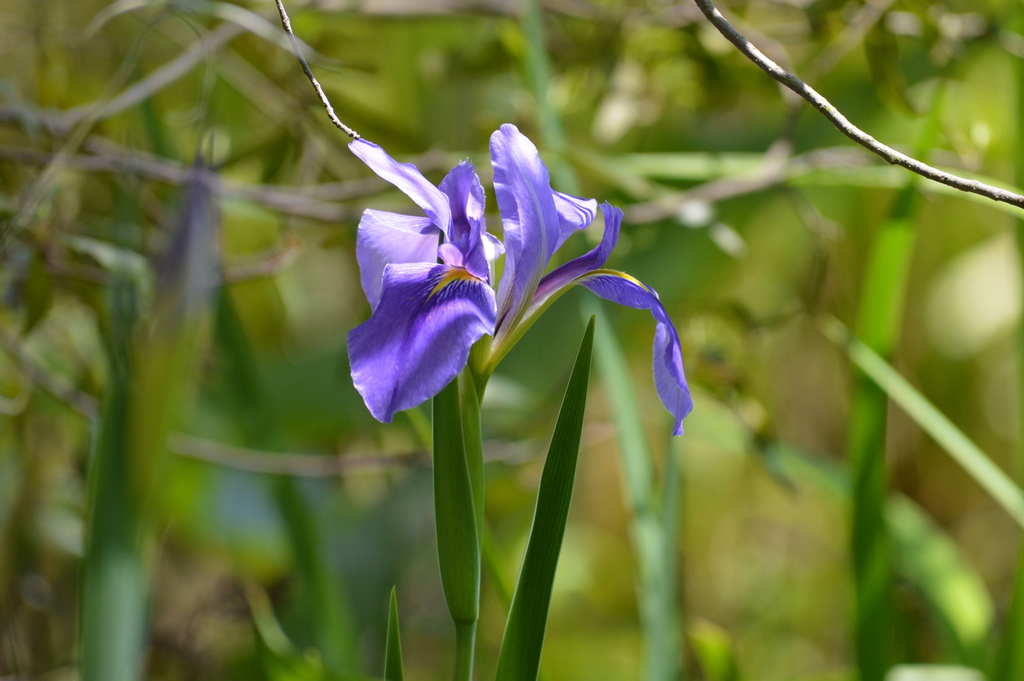
Giant blue iris (Iris giganticaerulea)
Care, watering, light and tips for Giant blue iris on Floravia.
Quick facts
- Family: Iridaceae
- Difficulty: Easy to care for
- Watering: every 3 days
- Light: Partial shade
- Temperature: 10–30 °C
- Toxicity: Toxic to pets
About Giant blue iris
Iris giganticaerulea, commonly known as the giant blue iris, is a robust iris species native to the wetlands of the southeastern United States. It is characterized by its large, intense blue-violet flowers and upright, sword-shaped foliage, forming dense clumps that look spectacular at pond edges, water gardens, or moist areas of the garden.
Native range
Southeastern United States, mainly Louisiana and Mississippi
Care tips
It requires full sun to partial shade and consistently moist, even waterlogged soil, making it ideal for water's edge or undrained containers. The substrate should be rich in organic matter and slightly acidic. Avoid letting the soil dry out completely, especially during flowering and active growth periods, as this can stress the plant and reduce blooming.
How to save a dying Giant blue iris
- Warning signs
- Yellowish or brown leaf tips, soft stems, or rot at the base.
- First aid
- Remove dead leaves, check drainage, reduce watering, and move to partial shade.
- What kills it
- Overwatering (rots rhizomes), lack of sun, or poor soil.
- Can it be saved?
- Yes, if the rhizome isn't completely rotted. Act quickly.