Stinking iris (Iris foetidissima)
Care, watering, light and tips for Stinking iris on Floravia.
Quick facts
- Family: Iridaceae
- Difficulty: Easy to care for
- Watering: every 7 days
- Light: Partial shade
- Temperature: 10–30 °C
- Toxicity: Toxic to pets
About Stinking iris
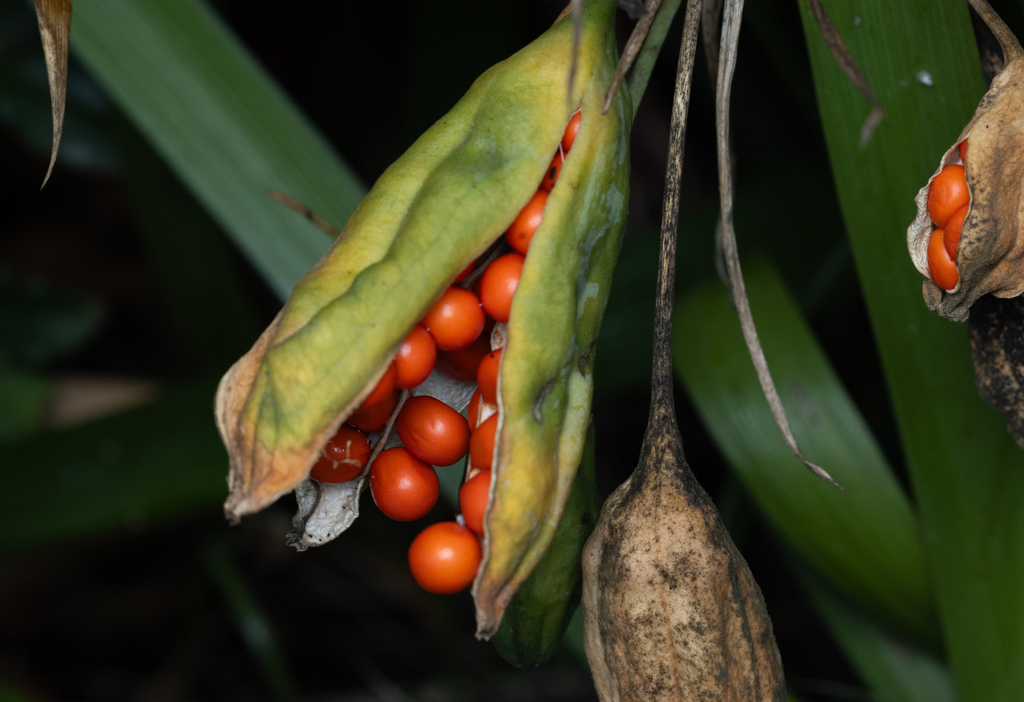
Iris foetidissima, commonly known as Stinking Iris or Gladwin Iris, is a rhizomatous perennial plant belonging to the Iridaceae family, prized for its attractive bright orange seed pods that persist through winter. Its dark green, sword-shaped leaves and rather inconspicuous pale yellow to lavender-blue flowers give way to a spectacular winter display. It is ideal for partial shade gardens, woodland settings, or as a low-maintenance plant in borders and wild gardens, providing seasonal interest.
Native range
Western Europe and North Africa
Care tips
It prefers partial shade or filtered sun, though it tolerates full shade, which may reduce its flowering. This plant is very adaptable regarding watering; it is drought-tolerant once established but appreciates regular watering in summer in dry climates. The ideal substrate is well-drained and rich in organic matter, though it tolerates poor and clayey soils. A common mistake to avoid is pruning the seed pods before winter, as they are its main ornamental feature.
How to save a dying Stinking iris
- Warning signs
- Yellowish or brown, soft leaves, with rot at the base. Lack of flowering or wilted flowers. Soft, dark roots.
- First aid
- Remove rotten leaves and roots. Repot into a pot with excellent drainage. Drastically reduce watering.
- What kills it
- Overwatering is its worst enemy, especially in winter. It does not tolerate waterlogging.
- Can it be saved?
- Yes, if you act quickly. Good drainage and moderate watering are key to its recovery.