Japanese iris (Iris ensata)
Care, watering, light and tips for Japanese iris on Floravia.
Quick facts
- Family: Iridaceae
- Difficulty: Moderate care
- Watering: every 3 days
- Light: Partial shade
- Temperature: 10–30 °C
- Toxicity: Toxic to pets
About Japanese iris
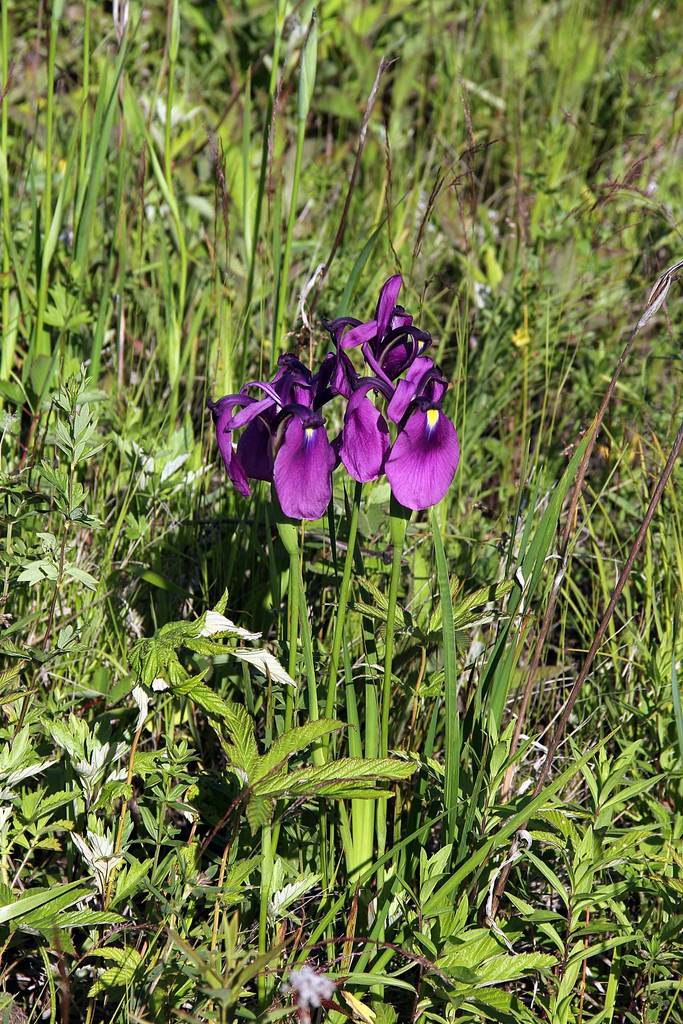
Iris ensata, commonly known as Japanese Iris, is a stunning aquatic or wetland plant that produces large, showy flowers in summer with broad, drooping petals. Its elegant upright stems and sword-shaped leaves make it ideal for pond edges, water gardens, or streams, adding an exotic and refined touch. The flowers, often with intricate patterns and vibrant colors ranging from white to blue and purple, are a spectacular focal point in any landscape.
Native range
East Asia (Japan, China, Korea, Russia)
Care tips
It requires full sun for optimal flowering, at least 6 hours daily. Keep the substrate consistently moist or even submerged in up to 15 cm of water during the growing season. It prefers acidic to neutral soils rich in organic matter. A common mistake is allowing the soil to dry out completely, which can inhibit flowering and weaken the plant.
How to save a dying Japanese iris
- Warning signs
- Yellowish or brown, soft leaves, no flowering. Rot at the base.
- First aid
- Check drainage. Reduce watering if waterlogged. Remove damaged leaves. Add organic matter.
- What kills it
- Constant waterlogging, poor soil, lack of direct sunlight. Does not tolerate drought.
- Can it be saved?
- Yes, if the root is not completely rotted. Act quickly to adjust watering and soil.