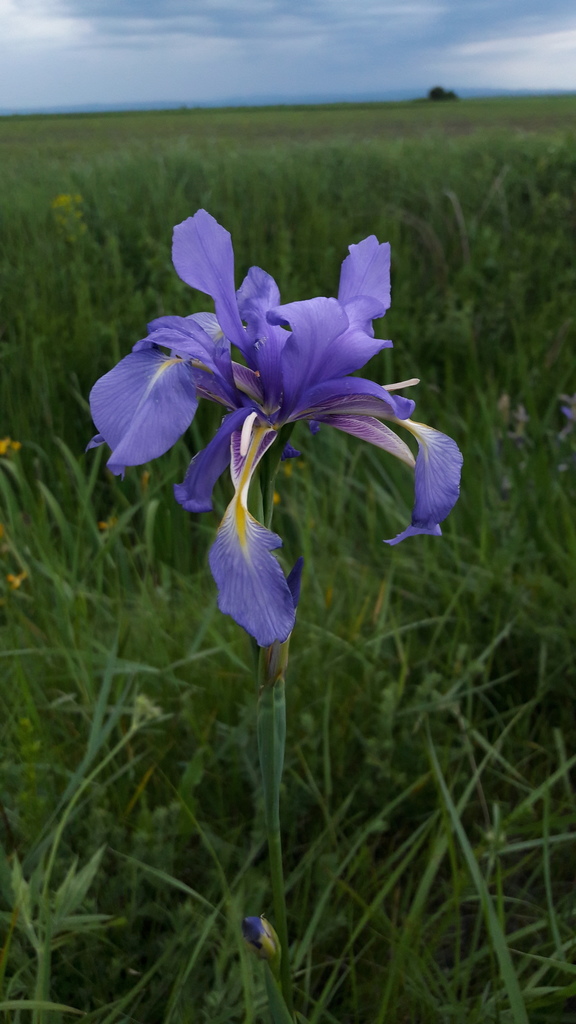
Salt marsh iris (Iris spuria)
Care, watering, light and tips for Salt marsh iris on Floravia.
Quick facts
- Family: Iridaceae
- Difficulty: Easy to care for
- Watering: every 7 days
- Light: Partial shade
- Temperature: 10–30 °C
- Toxicity: Toxic to pets
About Salt marsh iris
Iris spuria, commonly known as Blue Iris, is a rhizomatous perennial plant from the Iridaceae family, valued for its elegant and slender flowers in shades of blue, purple, white, or yellow, often displaying distinctive veining. With its upright habit and sword-like foliage, it's ideal for borders, waterside plantings, or as a cut flower, bringing a sophisticated and natural touch to any landscape. It blooms in late spring and early summer, adding lasting beauty to your garden.
Native range
Europe, North Africa, and temperate Asia
Care tips
Iris spuria thrives in full sun for optimal flowering, though it can tolerate some partial shade in very hot climates. It requires regular and abundant watering during the growing and blooming season, but the soil must drain well to prevent rhizome rot; reduce watering in winter. It prospers in fertile, organically rich, and well-draining soils. A common mistake is planting it in heavy, poorly draining soils, which can lead to fungal diseases.
How to save a dying Salt marsh iris
- Warning signs
- Yellowing or browning leaves from the tip, soft stems, lack of flowering, rot at the base.
- First aid
- Remove damaged leaves and stems. Check soil drainage and moisture. If rot, unearth and cut affected parts.
- What kills it
- Overwatering, especially in heavy soils. Also lack of direct sun or wrong transplanting time.
- Can it be saved?
- Yes, if rot hasn't fully affected the rhizome and the cause is corrected. Act quickly.