Dog's-tooth violet (Erythronium dens-canis)
Care, watering, light and tips for Dog's-tooth violet on Floravia.
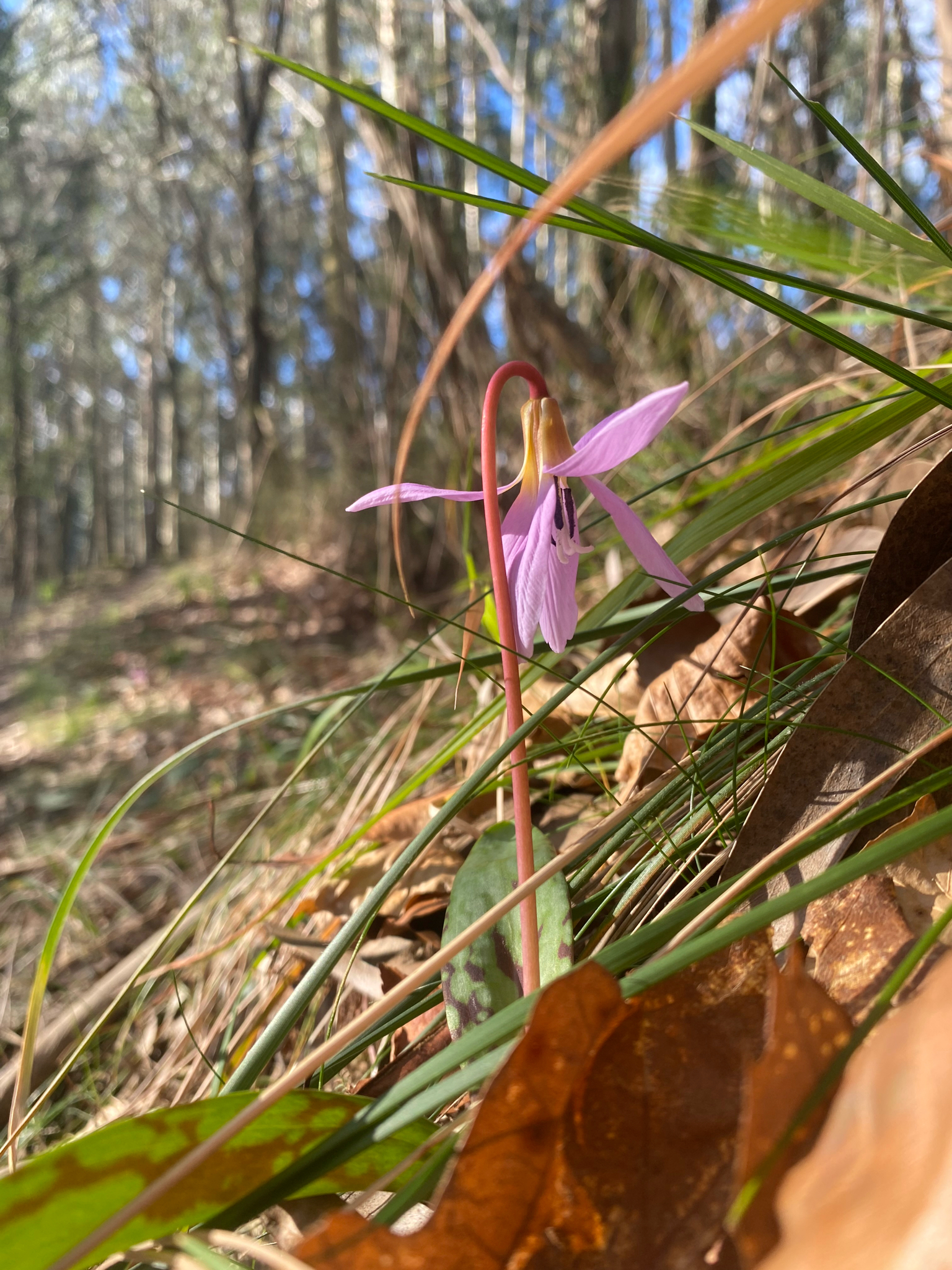
Quick facts
- Family: Liliaceae
- Difficulty: Moderate care
- Watering: every 7 days
- Light: Partial shade
- Temperature: 10–30 °C
- Toxicity: Toxic to pets
About Dog's-tooth violet
Erythronium dens-canis, commonly known as dog's tooth violet, is a charming perennial bulbous plant from the Liliaceae family, native to Europe. Its delicate flowers, often resembling a dog's fangs due to the shape of their recurved petals, range in color from white and pink to deep purple, emerging in early spring above mottled green and bronze foliage. It is ideal for woodland gardens, rockeries, or under deciduous trees, where it can naturalize and form attractive floral carpets.
Native range
Central and Southern Europe
Care tips
It prefers a location with partial to full shade, especially in warmer climates, and a soil rich in organic matter, well-drained but retaining some moisture. Keep the substrate moist during the spring growth and flowering period, reducing watering once the foliage begins to yellow and the plant enters summer dormancy. Avoid waterlogging, as the bulbs are susceptible to rot; a common mistake is overwatering during its dormant period. Once established, Erythronium dens-canis are low-maintenance and spread easily.
How to save a dying Dog's-tooth violet
- Warning signs
- Leaves yellowing or wilting rapidly, soft or moldy bulbs. May indicate overwatering or rot.
- First aid
- Remove bulb, inspect it. If rotted areas, cut them off. Replant in fresh, well-draining substrate, in a cool spot.
- What kills it
- Overwatering, especially in summer dormancy, rots the bulb. Requires good drainage.
- Can it be saved?
- Yes, if rot hasn't advanced much and you act fast. A healthy bulb is key.